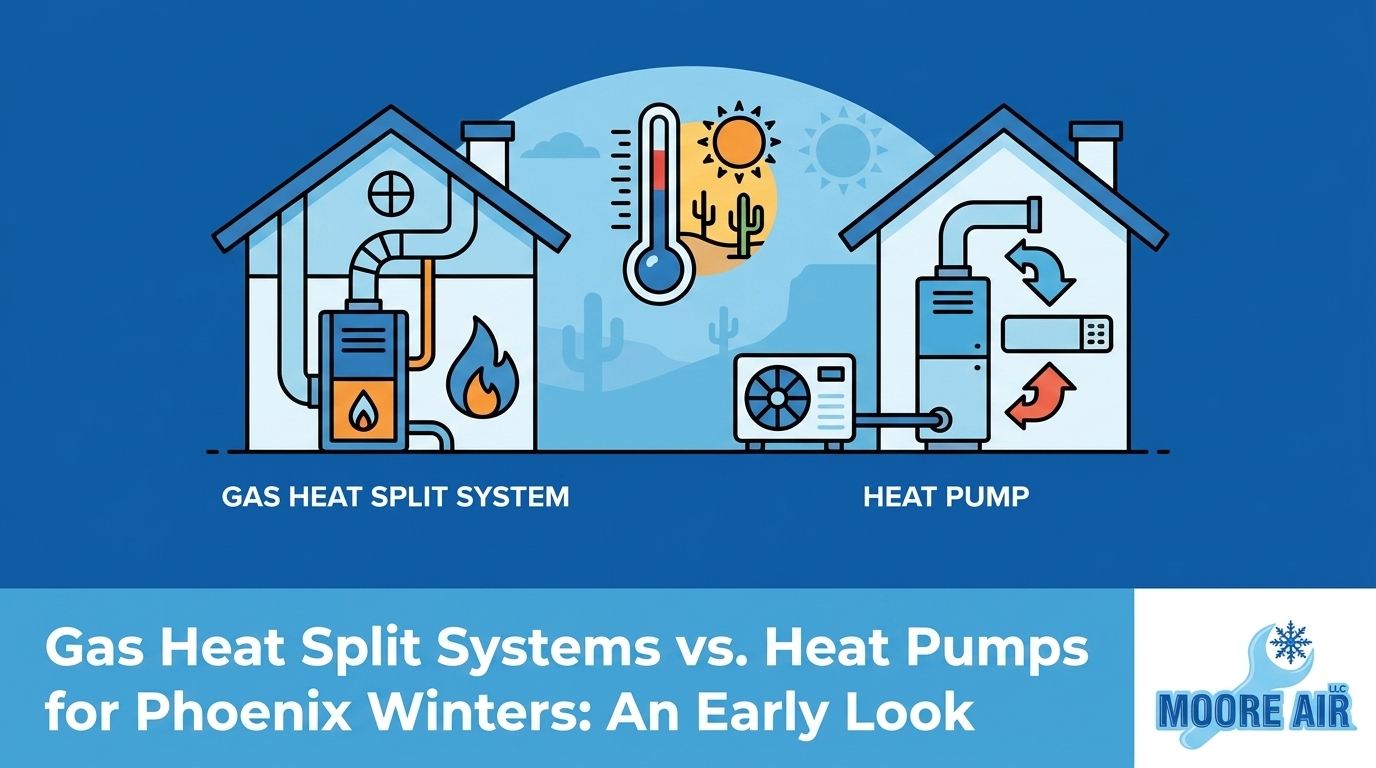
Gas Heat Split Systems vs. Heat Pumps for Phoenix Winters: An Early Look
Why August is the Perfect Time to Rethink Your Phoenix Heating Strategy
Waiting until December to think about your home’s heating system might seem logical, but in Arizona, that delay is often a recipe for an overpriced emergency. If you are exploring Gas Heat Split Systems vs. Heat Pumps for Phoenix Winters: An Early Look, you already know that the late August and pre-fall transition is the true decision window. Most homeowners do not realize that the best time to upgrade a heating system is precisely when their air conditioner is limping across the finish line of a brutal summer.
An aging AC unit that has struggled through months of relentless heat usually demands a full system replacement rather than another band-aid repair. This creates a critical decision point: do you replace it with a traditional gas furnace split system, or do you transition to a modern, high-efficiency electric heat pump? Making this choice while the weather is still warm gives you the leverage to explore your options without the pressure of a freezing house.
Understanding the unique demands of the Litchfield Park and Greater Phoenix area is the key to making the right choice for your home. By evaluating your comprehensive HVAC services now, you can seamlessly integrate professional heat pump services or gas heating solutions before the first cold front hits. At Moore Air, our team has spent years guiding local families through this exact transition. Let us break down how our specific desert climate dictates exactly what kind of equipment will serve you best.
Decoding the Desert Climate: How Extreme Temperature Shifts Impact HVAC Efficiency
The Litchfield Park and Greater Phoenix area features a winter climate that is entirely different from the rest of the country. Northern states require heating systems built to battle sustained, sub-zero freezes for months on end. In the desert, our winter profile consists of mild, sunny afternoons that transition rapidly into chilly nights, with temperatures frequently dropping into the 30s and 40s.
These drastic daily changes are known as diurnal temperature shifts, and they stress heating and cooling systems in very specific ways. In our experience servicing countless residential systems across the Valley, here is how the desert environment impacts your HVAC efficiency:
- The demand for versatility: Because a single November day can require air conditioning at 2:00 PM and heating at 2:00 AM, your system must be agile. It has to switch operational modes smoothly without wasting energy during the transition.
- Optimal operating ranges: Emphasize this fact: Phoenix winter lows in the low 40s fall perfectly into the optimal operating range for high-efficiency heating. Unlike in northern climates where extreme cold can cripple certain equipment, our local temperatures allow modern systems to run at peak performance.
- Rapid recovery requirements: When the sun drops behind the White Tank Mountains, the ambient temperature plummets quickly. A home’s heating system must have the capacity to recover that lost heat rapidly to keep the indoor environment comfortable before the morning frost sets in.
- Year-round wear and tear: In many parts of the country, the AC sits idle for six months. In Arizona, your outdoor unit works overtime from April through October, meaning any heating equipment paired with it must be durable enough to withstand an extended operational season.
Because of these extreme temperature shifts, choosing the right technology is about matching the equipment’s strengths to the desert’s unique weather patterns. Different heating technologies respond to this environment in distinct ways, making the choice between gas and electric a matter of household preference and infrastructure.
The Electric Advantage: How Heat Pumps Maximize Mild Winter Days
The short answer to why electric heat pumps are gaining incredible popularity in the desert is simple: they do not generate heat; they move it. Even when it is 45 degrees outside in Litchfield Park, there is still an abundance of ambient heat energy in the outdoor air. An electric heat pump vs traditional gas split system comparison often highlights this fundamental difference in operation.
The Mechanics of Heat Transfer
A heat pump uses refrigerant to absorb heat from the crisp outdoor air, compresses that refrigerant to raise its temperature, and then transfers that concentrated warmth inside your home. Because moving heat requires significantly less energy than creating it through combustion or electrical resistance, heat pumps can deliver up to three times more heat energy to a home than the electrical energy they consume. This makes them exceptionally efficient for mild winter climates.
Dual-Purpose Efficiency
The true beauty of a heat pump in Arizona is its dual-purpose nature. During the summer, it operates exactly like a standard air conditioner, pulling heat out of your home and releasing it outside. When winter arrives, a specialized reversing valve flips the flow of refrigerant, allowing the exact same equipment to heat your home. This streamlines your HVAC setup into one highly efficient, unified system.
Advanced Compressor Technology
Modern heat pumps are incredibly adept at maintaining consistent temperatures during mild desert days. By utilizing variable-speed compressors, these systems can ramp their output up or down in tiny increments. Instead of blasting at 100% capacity and then shutting off, they run continuously at lower speeds, keeping the indoor climate perfectly balanced while using a fraction of the electricity.
Understanding Efficiency Ratings
When our Moore Air technicians sit down with homeowners to evaluate heat pumps, we always look at two primary ratings: SEER2 (Seasonal Energy Efficiency Ratio) for cooling efficiency, and HSPF2 (Heating Seasonal Performance Factor) for heating efficiency. Because Phoenix winters rarely drop below freezing, a heat pump operates in its most efficient HSPF2 range almost exclusively, resulting in outstanding energy performance and a lower environmental impact.
The Gas Furnace Edge: Rapid Heating for Chilly Desert Mornings
While heat pumps offer incredible efficiency, the traditional gas heat split system remains a staple in many Arizona homes for one very compelling reason: raw heating power. A gas split system pairs a standard outdoor air conditioner with an indoor gas furnace. When you compare an electric heat pump vs traditional gas split system, the gas furnace provides a distinctly different comfort experience.
The Mechanics of Combustion Heating
A gas furnace creates heat through combustion. It burns natural gas in a sealed burner, transferring that intense thermal energy into a metal heat exchanger. Your blower motor then pushes indoor air over that scorching hot exchanger, warming the air before distributing it through your ductwork. The byproduct gases are safely vented out of your home through a flue.
The Primary Advantage: Hotter Supply Air
The biggest benefit of a gas furnace is the temperature of the air coming out of your vents. While a heat pump might deliver air at around 90 to 95 degrees, a gas furnace regularly pushes out air between 120 and 130 degrees. When desert temperatures plummet into the 30s at night, this significantly hotter supply air provides rapid recovery, warming a freezing house in a matter of minutes rather than hours.
Reliability and Familiarity
For homeowners accustomed to the robust, immediate blast of heat that a furnace provides, switching to a heat pump can sometimes feel underwhelming. Gas furnaces are reliable, time-tested machines that handle the coldest desert mornings with ease. Our Moore Air team recently helped a local homeowner upgrade their aging equipment to a new Amana AC and gas heat split system. The installation went smoothly, and our technicians made all the final wiring adjustments at no extra charge—ensuring the dual-system ran flawlessly without any surprise fees or hidden costs.
Installation Considerations
Sticking with a gas furnace does require specific infrastructure. You must have an active natural gas line, proper ventilation for exhaust gases, and a dedicated electrical setup for the paired furnace installation. Because a split system uses two distinct pieces of equipment for heating and cooling, proper installation and precise wiring adjustments are critical to ensure the thermostat communicates flawlessly with both units.
Head-to-Head Comparison: Gas Split Systems vs. Heat Pumps
To make the best decision for your late August replacement project, we find that it helps to see how an electric heat pump vs traditional gas split system stack up against each other across several key categories. Both systems have distinct advantages depending on your home’s infrastructure and your personal comfort preferences.
| Feature | Gas Heat Split System | Electric Heat Pump |
|---|---|---|
| Mild Weather Efficiency | Moderate. Burns fuel regardless of how mild it is outside. | Exceptional. Transfers ambient heat using minimal electricity. |
| Rapid Heating Capability | Superior. Delivers 120°F+ air for fast morning warm-ups. | Gradual. Delivers 90°F-95°F air for steady, even heating. |
| Infrastructure Required | Requires natural gas lines and proper exhaust venting. | Requires dedicated 220V electrical circuits; no gas needed. |
| System Lifespan & Wear | Furnace rests in summer, potentially extending its lifespan. | Runs year-round (cooling and heating), requiring diligent maintenance. |
| Environmental Impact | Relies on fossil fuels and produces combustion emissions. | Runs on electricity; zero on-site emissions. |
Ultimately, your choice depends on what you value most. If you want the absolute fastest warm-up time on a 35-degree January morning and already have gas lines installed, a split system is hard to beat. If you want to maximize energy efficiency, eliminate fossil fuels from your home, and enjoy ultra-quiet, continuous comfort, a heat pump is the clear winner.

Navigating Generic Incentives and Long-Term Value Without the Upsell
Upgrading your HVAC system is a significant investment, but there are ways to offset the initial output if you choose high-efficiency equipment. High-efficiency heat pump installations, in particular, may qualify for general federal tax credits and local utility rebates. Because these programs are designed to encourage the adoption of energy-saving technology, transitioning away from older gas units to electric heat pumps often opens the door to these incentives.
Focusing on Long-Term Operational Value
Incentives are helpful, but the true financial benefit of a new system lies in its long-term operational value. Choosing a system matched to your actual household usage rather than overpaying for unnecessary capacity is vital. An oversized unit will short-cycle, wasting energy and wearing out components prematurely. An undersized unit will run constantly, driving up utility bills without ever achieving comfort.
Avoiding the Crisis Markup
Our team recently helped a customer who faced a complete system failure in the fall and received unrealistic replacement quotes from other contractors trying to capitalize on their urgency. By calling Moore Air for a second opinion, they secured a new unit at a fair price with professional service, avoiding the crisis markup entirely. This highlights our core philosophy of “Honest Quality Work Fair Prices” and providing “Moore Air For Less Cash.” Unbiased advice ensures you get the right system for your budget, not just the most expensive option on the market.
Verify Your Eligibility
Because incentive programs, tax codes, and utility rebates change frequently, we always encourage readers to consult with a tax professional or their local utility provider to verify current eligibility before making a final decision. Our goal is to provide honest assessments that help you navigate these options clearly.
Making the Pre-Fall Transition: Strategic Timing for Replacement
Our Moore Air technicians always advise that making the decision to upgrade your heating and cooling system during the late August / pre-fall transition is the smartest move a homeowner can make. Replacing a failing AC in late summer alongside a heating upgrade is vastly more cost-effective than waiting for a mid-winter breakdown. When you replace both the indoor and outdoor units together, you save on labor costs and ensure that the components are perfectly matched for maximum efficiency.
Taking action now also provides immense peace of mind. You get to face the changing seasons knowing that you have a newly installed, fully tested system ready to go before the first cold front hits. To determine if a pre-fall replacement is necessary, use this brief evaluation checklist:
- Evaluate summer performance: Did your AC run non-stop but fail to keep the house cool during July and August?
- Review repair history: Have you paid for multiple refrigerant leaks or electrical repairs over the past 24 months?
- Check equipment age: Is your current system more than 10 to 12 years old?
- Assess energy bills: Have your utility costs spiked noticeably compared to the same months last year?
- Listen for warning signs: Does your system make grinding, rattling, or squealing noises during startup?
If you answered yes to more than one of these questions, it is time to look into professional gas furnace services or heat pump replacements before the autumn rush begins.
Frequently Asked Questions About Heating in Phoenix
Are heat pumps effective in Phoenix?
Yes, heat pumps are incredibly effective in the Litchfield Park and Greater Phoenix area. Because our winter temperatures rarely drop below freezing, heat pumps operate at peak efficiency in the desert. They easily extract ambient heat from the mild outdoor air, providing a highly efficient and consistent indoor climate without the need for fossil fuels.
Should I switch from a gas furnace to a heat pump in Arizona?
It depends entirely on your home’s infrastructure and your preference for rapid heating versus dual-purpose energy efficiency. If you value a fast, intense blast of hot air on a chilly morning, you may want to stick with gas. However, if you want to streamline your system into a single, highly efficient unit that handles both cooling and heating, switching to a heat pump is a fantastic upgrade.
Is it cheaper to heat with gas or a heat pump?
Operational costs vary based on current utility rates, but heat pumps generally offer exceptional high efficiency for mild climates, which can lower monthly energy usage. Gas furnaces provide powerful heating during cold snaps but rely on natural gas prices. Over a full mild winter, a high-efficiency heat pump often utilizes less raw energy to maintain comfort.
Do I need a gas furnace in Phoenix?
While a gas furnace is not strictly necessary due to our mild desert winters, many homeowners prefer them for the rapid, hot air they provide on chilly mornings. Heat pumps are more than capable of keeping a Phoenix home warm all winter long, so the choice comes down to personal comfort preferences rather than strict necessity.
When is the best time to replace my HVAC system in Arizona?
Late summer or early fall is the absolute ideal time to replace your system. This late August transition window prepares your home for winter before emergency heating demands arise, and it allows you to replace summer-worn cooling equipment before it fails entirely.
Secure Your Comfort Before the Cold Desert Nights Arrive
Both gas split systems and electric heat pumps offer distinct, powerful advantages for the Phoenix climate. Whether you prefer the rapid, robust heating of a traditional gas furnace or the continuous, energy-sipping efficiency of a modern heat pump, making this decision in late August gives you a massive strategic advantage. A clear, region-specific breakdown helps you make an informed choice without the pressure of an emergency breakdown. Take control of your home’s comfort today—schedule a consultation with our experts at Moore Air to weigh your options with a local professional and secure your peace of mind before the cold desert nights arrive.