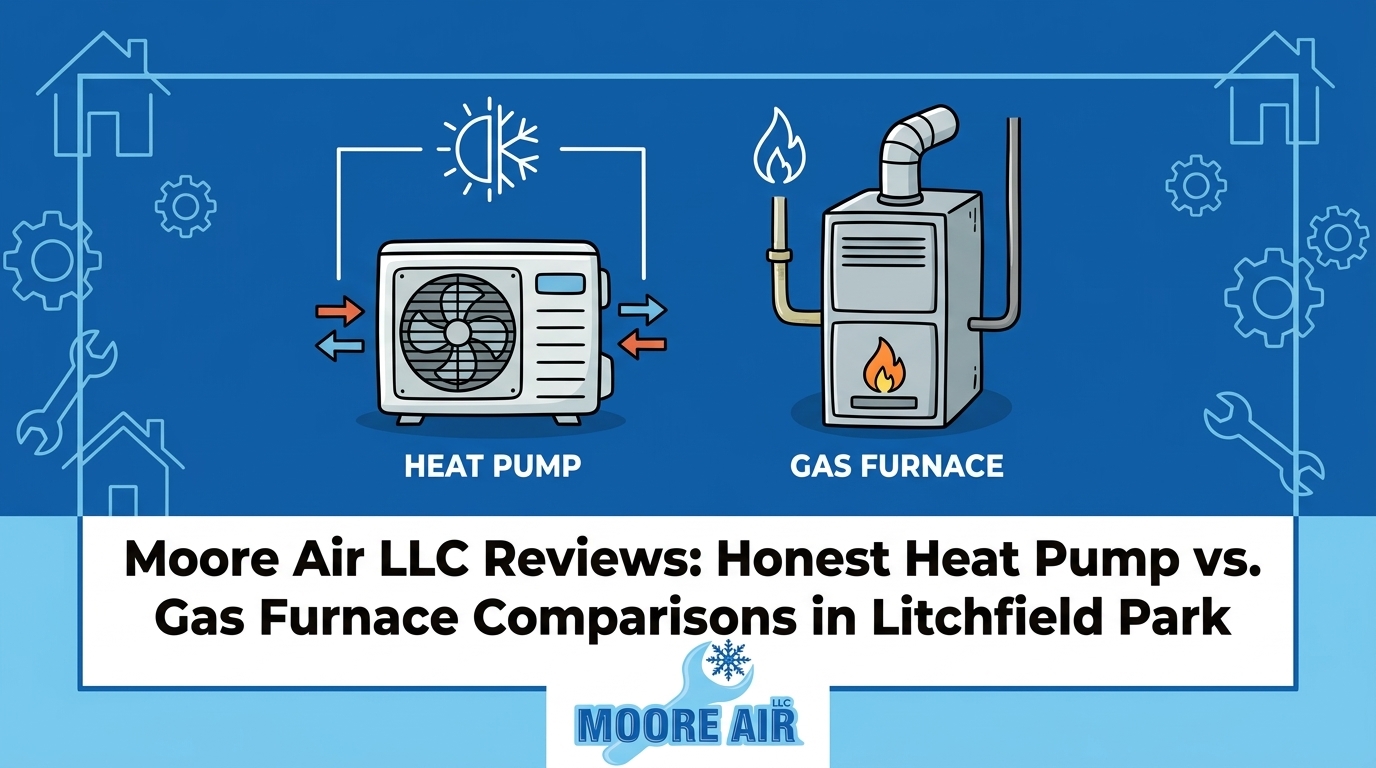
Moore Air LLC Reviews: Honest Heat Pump vs. Gas Furnace Comparisons in Litchfield Park
Navigating a Fall HVAC Replacement in the West Valley
Your aging air conditioner barely survived the intense summer heat, running nonstop just to keep the house tolerable, and now that strange rattling noise from the compressor refuses to go away. Evaluating your options comparisons for homeowners can feel overwhelming, especially when you are racing against the calendar. Mid-fall brings a brief window of relief to the West Valley, making October the ideal time to evaluate your equipment before the cool desert winter nights settle in. You are facing a critical choice: upgrading to a traditional standard AC paired with a gas furnace, or transitioning entirely to an all-electric heat pump.
If you need comprehensive HVAC services in Litchfield Park or find yourself requiring emergency air conditioner repair before making a final decision, securing a professional evaluation is your first step.
Making the right choice requires looking past generic national advice. Most online HVAC resources are written for homeowners in the Midwest or Northeast, where sub-zero temperatures dictate heavy-duty combustion heating. In Litchfield Park, our unique microclimate demands a different approach. The transition from extreme triple-digit cooling demands to the need for reliable, moderate heating requires a system specifically calibrated for the desert. A localized, honest assessment ensures you invest in equipment that manages your indoor comfort efficiently year-round without overpaying for unnecessary capacity.
Understanding Heat Pump Efficiency in the Desert Climate
Modern heat pumps are engineering marvels perfectly suited for the Arizona desert. Unlike traditional furnaces that consume fuel to create heat, heat pumps operate by moving heat from one place to another. During the intense summer months, they function exactly like a standard air conditioner, absorbing heat from inside your home and pumping it outside. When mid-fall arrives and temperatures drop, a component called the reversing valve shifts the refrigerant flow. The system then absorbs ambient thermal energy from the outdoor air and transfers it inside.
According to Department of Energy data, because heat pumps transfer heat rather than generate it, they can reach up to 300 percent efficiency under optimal conditions. This means for every unit of electrical energy consumed, the system can deliver three units of heat energy to your living space. National advice often warns against heat pumps because their efficiency drops in freezing northern winters. However, Litchfield Park’s average winter lows remain well within the high-efficiency operating range for modern heat pump technology.
| System Characteristic | Traditional Gas Furnace | Modern Heat Pump |
|---|---|---|
| Heating Method | Combustion (burning fuel to create heat) | Heat Transfer (moving ambient thermal energy) |
| Energy Efficiency | High (up to 98% AFUE) | Exceptional (up to 300% effective efficiency) |
| Climate Suitability | Ideal for sub-zero freezing climates | Perfect for mild desert winters |
| Summer Function | None (requires separate AC unit) | Provides high-efficiency cooling |
Because our local temperatures rarely plunge into deep, sustained freezes, the expensive “emergency heat” strip systems required in colder states are rarely needed here. Your system operates in its most efficient stage throughout the vast majority of the winter season, preventing the massive performance drops and high utility consumption seen in colder regions.
The Science of Heat Transfer
Even when the outdoor temperature feels chilly to the human body, there is still an abundance of thermal energy present in the air. Refrigerant has an incredibly low boiling point, allowing it to absorb this ambient heat, compress it to increase the temperature, and release it into your ductwork. This cycle requires significantly less energy consumption compared to traditional combustion heating, resulting in a smoother, more consistent temperature profile throughout your home without the aggressive cycling of a furnace.

When Does a Gas Furnace and Split System Make Sense?
While heat pumps are incredibly efficient, there are specific scenarios where a traditional gas furnace paired with a split air conditioning system remains a highly practical choice. If your home already features robust, well-maintained natural gas infrastructure, utilizing that existing framework can streamline the installation process. Homeowners who have relied on gas heating for decades often prefer the traditional split system setup, and a reputable contractor will always respect that preference while ensuring the new equipment meets modern efficiency standards.
The primary difference you will notice between the two systems is the heat delivery profile. Gas furnaces ignite burners and push air over a heat exchanger, delivering a rapid, intense blast of hot air directly through your vents. Heat pumps, by contrast, deliver a more gradual, steady stream of warm air. If you prefer your home to heat up rapidly on a chilly morning, a gas furnace provides that immediate, powerful response.
Integrating a modern, high-efficiency air conditioning unit with a gas furnace requires precise wiring, proper load calculations, and meticulous installation practices. A typical pattern we see in the industry involves homeowners dealing with questionable supply wiring left behind by previous, less rigorous contractors. One local homeowner upgrading their system during the summer discovered faulty wiring from a past installation that was causing operational issues. A trustworthy installation team corrected the supply wiring on time and at no extra charge, ensuring the new split system was installed cleanly with no surprise fees or fine print. This level of transparency is critical when integrating complex indoor and outdoor components.
- Existing Infrastructure: Homes with dedicated gas lines and proper flue venting already in place.
- Heat Preference: Homeowners who prefer a rapid, high-temperature blast of air over gradual warming.
- System Separation: The desire to keep the cooling (AC) and heating (furnace) mechanicals completely independent.
Avoiding the Upsell: Why You Likely Don’t Need a Dual-Fuel System
As you research replacement options this mid-fall, you will likely encounter heavy marketing for dual-fuel, or hybrid, heating systems. A dual-fuel system pairs an electric heat pump with a gas furnace. The heat pump handles the mild winter days, and the system automatically switches to the gas furnace when temperatures drop below a certain threshold. National brands heavily promote these setups as the ultimate solution for energy efficiency and comfort.
The short answer is that the mild winters in the West Valley rarely justify the added complexity and cost of dual-fuel setups. Because our local temperatures stay well within the optimal operating range of a standard heat pump, the gas furnace component of a hybrid system would sit idle for the vast majority of the season. You end up paying for two distinct heating technologies when one is perfectly capable of handling the local climate load.
Protecting homeowners from unnecessary complexity is a core part of providing honest quality work and fair prices. Sometimes, a straightforward evaluation reveals that a full replacement isn’t strictly necessary at all. For example, a homeowner reached out in the spring regarding a 31-year-old air conditioner that was struggling. Rather than pressuring them into buying a brand-new, complex system, the technician expediently restored the aging unit to normal function, keeping it running successfully for another ten years without upselling. This is exactly why we emphasize no games in HVAC pricing—an honest assessment of what your home actually needs is far more valuable than a high-pressure sales pitch for unneeded technology.
The ‘No Games’ Pricing Philosophy
Transparency in HVAC means recommending only the equipment required for your home’s actual heating and cooling load. Over-engineered solutions like dual-fuel systems introduce more mechanical components, more complex control boards, and higher long-term maintenance requirements. By choosing a system tailored precisely to the Litchfield Park climate, you achieve long-term savings and enjoy a significantly more reliable setup.
What Moore Air LLC Reviews Reveal About Honest System Comparisons
Navigating the technical specifications of SEER2 ratings, heat transfer coefficients, and airflow dynamics requires a contractor with a proven track record of reliability. The equipment you choose is only as effective as the team installing it. When you look closely at local feedback, authentic customer experiences serve as a critical trust signal for homeowners making long-term equipment investments.
Consistent themes emerge when evaluating reliable service in the West Valley. Homeowners frequently highlight fast response times during critical weather shifts, highly accurate diagnostics that pinpoint the actual root cause of a failure, and transparent options that lay out the pros and cons without a hard sell. When a technician accurately diagnoses a malfunctioning system and fixes it on the spot without pushing a premature replacement, it builds a foundation of trust.
This straightforward approach to HVAC options is why consistent, honest service builds a reputation that generic sales pitches simply cannot match. If you want to understand how this philosophy translates to real-world results in your neighborhood, you can read more customer reviews to see how an unwavering commitment to transparent diagnostics helps homeowners make confident decisions.
Factoring in Energy Efficiency and Utility Incentives
Whether you ultimately decide on a heat pump or a gas furnace, upgrading an aging system during the mid-fall window brings significant improvements in energy efficiency. Modern equipment is evaluated under strict Department of Energy testing protocols known as SEER2 (Seasonal Energy Efficiency Ratio 2) for cooling and HSPF2 (Heating Seasonal Performance Factor 2) for heat pumps. These updated testing procedures closely mimic real-world conditions, including realistic ductwork static pressure, meaning the efficiency ratings you see on the label accurately reflect the performance you will experience in your home.
Key efficiency factors to consider:
- SEER2 Ratings: Indicates the cooling efficiency of both standard air conditioners and heat pumps over a typical cooling season. Higher numbers equate to lower electrical consumption.
- HSPF2 Ratings: Measures the heating efficiency of a heat pump. A robust HSPF2 rating ensures the system extracts maximum thermal energy from the mild desert air.
- AFUE Ratings: Annual Fuel Utilization Efficiency measures how effectively a gas furnace converts fuel into usable heat.
- Variable-Speed Technology: Modern blower motors can adjust their speed incrementally, providing precise temperature control and reducing energy spikes compared to older single-stage motors.
Furthermore, qualifying high-efficiency heat pump installations may be eligible for generic federal tax credits and local utility rebates designed to encourage electrification and energy conservation. Because these programs update frequently and rely on specific equipment combinations, we advise homeowners to consult with their utility providers or tax professionals to verify current programs. Upgrading to a modern, high-efficiency system lowers your overall energy consumption during both peak summer cooling months and our mild winter heating season.
Make a Confident Heating Choice for Your Home
Litchfield Park’s climate makes the choice between a heat pump and a gas furnace a highly localized decision. While national trends might push heavy-duty furnaces or complex dual-fuel systems, the reality of the West Valley is that a modern heat pump is exceptionally efficient, while a standard split system remains a solid choice for homes with existing gas infrastructure.
An honest, “no games” assessment is the best tool you have for making a confident, long-term equipment decision. Before the temperatures drop and winter nights arrive, take the time to evaluate your aging equipment. Schedule a pre-winter evaluation to secure reliable heating, ensuring your home remains comfortable, efficient, and perfectly adapted to the desert climate.
Frequently Asked Questions
Is a heat pump better than a gas furnace in Arizona?
For most homeowners in the West Valley, a heat pump is exceptionally efficient and often the better choice. Because our winters are mild, heat pumps operate in their peak efficiency range, transferring ambient heat indoors without consuming fuel. However, if your home already has robust gas infrastructure and you prefer the rapid, hot airflow of combustion heating, a gas furnace remains a viable and reliable option.
At what temperature is a heat pump no longer effective?
Modern high-efficiency heat pumps can extract thermal energy from the air even when temperatures drop below freezing. While older models struggled below 40 degrees Fahrenheit, current technology maintains excellent heating capacity well below the coldest average temperatures experienced in the Arizona desert. You will rarely, if ever, encounter a local temperature that renders a modern heat pump ineffective.
Do I need a gas furnace if I have a heat pump?
No, a standard heat pump provides both full-capacity summer cooling and complete winter heating in a single system. Combining a heat pump with a gas furnace creates a “dual-fuel” or hybrid system, which is generally unnecessary in our mild climate. A properly sized heat pump can handle the entire winter heating load on its own without relying on a gas backup.
What is the most efficient way to heat a home in the desert?
An electric heat pump is widely considered the most efficient heating method for desert microclimates. Because it moves existing heat rather than burning fuel to create it, a heat pump can achieve up to 300 percent efficiency. This results in significantly lower energy consumption compared to traditional combustion furnaces or electric resistance heating.
Do heat pumps work reliably in the desert winter?
Yes, heat pumps are incredibly reliable during a desert winter. The technology thrives in moderate climates where temperatures rarely stay below freezing for extended periods. By maintaining a steady, consistent transfer of thermal energy, a heat pump keeps your home comfortable without the aggressive on-and-off cycling associated with oversized furnaces.
Why do Moore Air LLC reviews emphasize ‘no games’ pricing?
Our “no games” pricing philosophy means we provide straightforward, transparent diagnostics without hidden fees or high-pressure upsells. Customers frequently highlight this in their feedback because it eliminates the stress of navigating complex HVAC options. We recommend only the equipment your home actually needs to maintain comfort and efficiency in the local climate.