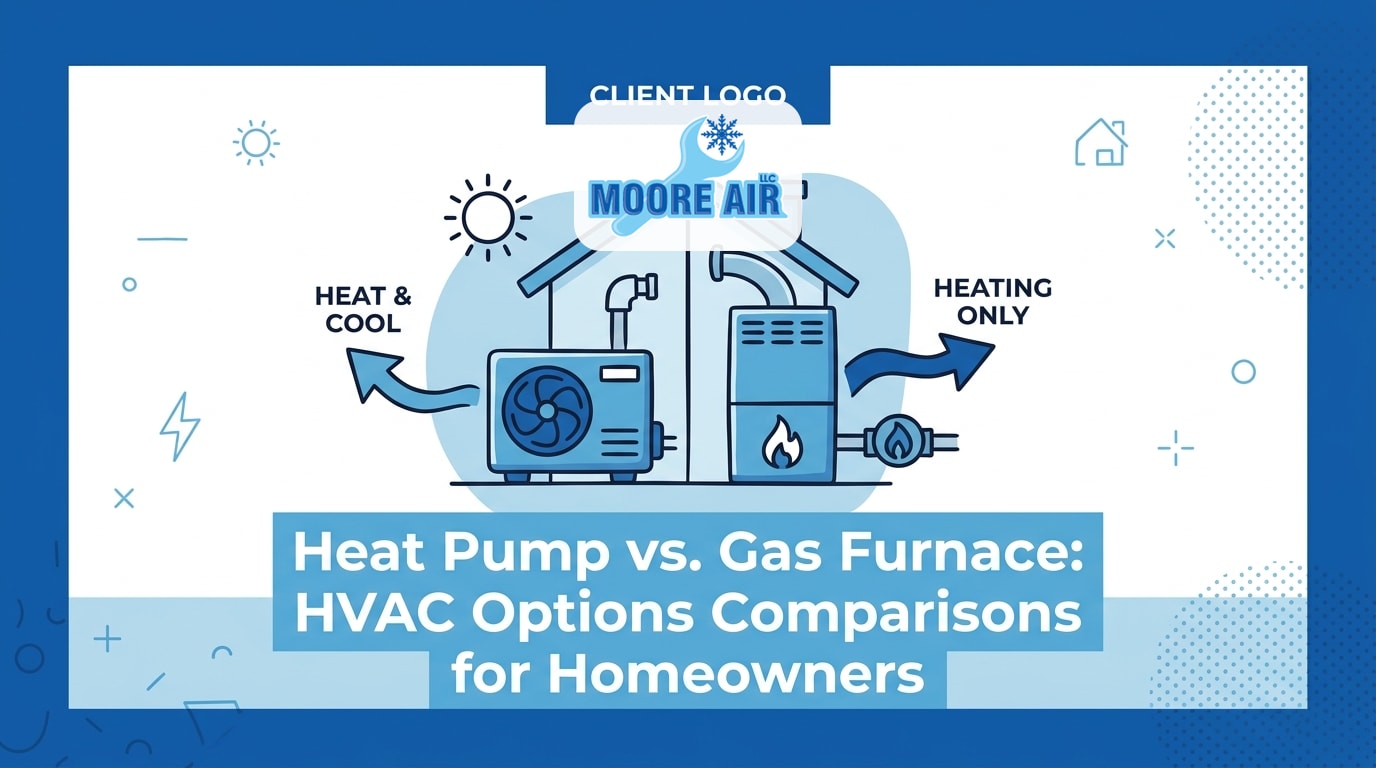
Heat Pump vs. Gas Furnace: HVAC Options Comparisons for Homeowners
Are You Ready to Evaluate Your Heating System Before Winter?
Did your aging HVAC unit barely survive the grueling summer heat, leaving you wondering if it will make it through the coming winter? When the seasons shift, our team at Moore Air has found that performing objective options comparisons for homeowners is the most effective way to ensure your home stays comfortable without wasting energy. The decision point often comes down to evaluating whether a heat pump or a traditional gas furnace is the better replacement option for your specific property. Making this choice requires understanding how each technology interacts with your local environment, your home’s ductwork, and your long-term comfort goals.
In our experience, the mild autumn weeks during the October pre-winter transition represent the ideal window to assess your equipment’s health before emergency breakdowns occur. By taking action now, you avoid the panic of a sudden failure on the first chilly night of the year. Whether you need comprehensive air conditioning services or targeted professional AC repair, addressing your system’s health now prevents emergencies later and sets the stage for a reliable, energy-efficient winter season.
Why Is the Fall Transition the Best Time for an HVAC Upgrade?
Timing is everything when it comes to major home improvements, and heating systems are no exception. Our technicians see it every year: proactive scheduling during the fall maintenance season prevents the long wait times that inevitably plague the industry during peak weather events. When you wait until the first freezing night to turn on your heater, you join a long line of other homeowners discovering their systems have failed simultaneously. Upgrading during the October pre-winter transition ensures that equipment is readily available and installation crews have the flexibility to perform meticulous, unhurried work.
Evaluating your system during mild weather allows for a thoughtful, unpressured decision between heating technologies. When your house is freezing, the urgency to restore heat often leads to rushed decisions, limiting your ability to weigh the long-term benefits of different systems. An honest, thorough diagnosis of your current equipment is the critical first step in the options comparison process, giving you the clarity needed to choose the right path forward.
The Importance of Unpressured Diagnostics
A true assessment of your heating system requires time and transparency. You need a technician who clearly explains the system’s status without pushing for an immediate upsell. Clear communication helps homeowners understand exactly what is happening inside their aging unit, from worn contactors to compromised heat exchangers. When diagnostics are performed without the pressure of an active weather emergency, you have the bandwidth to ask questions, review efficiency ratings, and make a decision that aligns with your household’s needs rather than simply reacting to a crisis.
Are Traditional Gas Furnaces Too Powerful for the Desert?
For decades, traditional gas furnaces have been the default heating solution across the country. These systems generate heat by combusting natural gas or propane, transferring that intense thermal energy into the air, and blowing it through your home’s ductwork. While highly effective in sub-zero climates, gas furnaces are often vastly over-spec’d for mild desert environments. Most standard furnaces produce a massive amount of heat very quickly, which is necessary when fighting off blizzards, but can be problematic when the weather outside is only moderately chilly.
Because average winter low temperatures in the area typically remain in the 40s (F), our service team frequently encounters high-capacity gas furnaces producing far more heat than a desert home actually needs. This leads to a phenomenon known as short-cycling. When a heating system is too powerful for the home’s actual heating load, it blasts the house with hot air, satisfies the thermostat almost immediately, and shuts off. A few minutes later, it turns back on. This rapid on-and-off cycling causes premature wear and tear on mechanical components, creates noticeable temperature swings between rooms, and wastes a significant amount of energy.
| System Characteristic | Traditional Gas Furnace Strategy | Desert Climate Reality |
|---|---|---|
| Heat Generation | Combusts fuel to create intense, high-temperature air immediately. | Homes rarely need rapid, intense heating; mild, consistent warmth is preferred. |
| Operating Cycles | Designed for long run-times in freezing weather to maintain temperatures. | Often short-cycles in mild weather, leading to uneven temperatures and component strain. |
| Energy Source | Relies on a continuous supply of combustible fossil fuels. | Electricity is often preferred for integrated, year-round climate control systems. |
| Sizing Standards | Built to combat massive heat loss in poorly insulated, freezing environments. | Requires careful load calculations to avoid installing an oversized, inefficient unit. |
While cold-weather states require this level of raw heating power, the reality of mild desert winters paints a different picture. However, providing an objective look at your options means acknowledging when a gas furnace might still make sense. If your Litchfield Park home already has extensive gas infrastructure, specialized layout requirements, or older ductwork designed specifically for high-heat airflow, a properly sized, modern gas furnace with a variable-speed blower can still be a viable, efficient option.
Understanding Heating Loads in Mild Climates
Heating load refers to the exact amount of thermal energy required to keep a specific home at a comfortable temperature based on its size, insulation, windows, and the local climate. Matching equipment size to local weather is critical. The drawbacks of oversized furnaces are significant: they fail to run long enough to properly mix the air in your home, leading to hot and cold spots, and they consume excess energy during startup phases. Accurate load calculations ensure that whichever system you choose is perfectly tailored to your property.
How Do Modern Heat Pumps Perform in Mild Winter Climates?
Unlike furnaces that must consume fuel to create heat, heat pumps operate on a completely different principle: they transfer heat. Using advanced refrigeration cycles, a heat pump extracts ambient thermal energy from the outside air, compresses it to raise its temperature, and moves it inside your home. Because moving heat requires significantly less energy than generating it from scratch, modern heat pumps can deliver up to three times more heat energy than the electrical energy they consume to operate.
There is a persistent myth that heat pumps cannot handle cold weather. While legacy systems from decades ago struggled when temperatures dropped, modern heat pump technology operates efficiently well below freezing. More importantly, the region’s mild winter nights provide the absolute optimal operating range for heat pump efficiency. In Litchfield Park, where deep freezes are exceptionally rare, a heat pump operates in its peak performance zone almost entirely throughout the winter season.
One of the most significant advantages of this technology is that a heat pump serves as a highly efficient year-round solution. It handles both summer cooling and winter heating from a single piece of equipment. When comparing the operational lifespan and maintenance requirements, a heat pump eliminates the need to maintain two entirely separate systems (an air conditioner and a gas furnace). Instead, you have one streamlined, electrically driven system managing your comfort all year long.

Year-Round Efficiency and Comfort
The seamless transition from cooling to heating is a major benefit for homeowners. With a heat pump, a single thermostat adjustment reverses the flow of refrigerant, changing the system from an air conditioner into a heater. Furthermore, consistent, moderate heat output improves overall indoor comfort compared to the intense blasts of a furnace. Heat pumps provide a steady, gentle warmth that evenly fills the home, eliminating the drastic temperature spikes and drops often associated with traditional combustion heating.
Repair vs. Replace: Should You Keep Your Current System Running?
One of the most challenging aspects of the October pre-winter transition is deciding whether to invest in maintaining your current aging system or commit to a full replacement. Aging systems often present clear signs that they are nearing the end of their functional life. You might notice unusual grinding or rattling noises, an unexplained increase in your monthly energy consumption, or certain rooms that simply refuse to stay warm. When these symptoms begin compounding, it is time to evaluate the long-term viability of the equipment.
However, there is distinct value in keeping vintage units running if they only require minor, infrequent repairs. Regular, professional upkeep can extend the lifespan of older machines safely and effectively. At Moore Air, our core philosophy is Honest Quality Work & Fair Prices. Our trustworthy technicians will always help you keep an older unit running safely without unnecessary pressure to replace it if a repair is truly the best option for your home. Investing in routine AC maintenance ensures that moving parts are lubricated, electrical connections are secure, and safety sensors are functioning correctly.
To make a sound decision, you need a framework for determining when the cost of recurring repairs outweighs the benefits of a modern, energy-efficient upgrade. If you find yourself calling for service multiple times a season, or if a major component like a compressor or heat exchanger fails on a system that is over a decade old, replacement is usually the wiser path. A new system not only stops the cycle of repair bills but also dramatically reduces energy consumption, providing a return on your investment through lower monthly utility usage.
How Does Your Heating Choice Impact Indoor Air Quality?
The choice of HVAC equipment extends far beyond simply warming the air; it connects directly to broader indoor air quality and humidity management. Different heating systems circulate air at varying speeds and temperatures, which significantly affects indoor humidity levels. Gas furnaces, for example, tend to dry out the air considerably due to their high-heat combustion process. Heat pumps, delivering a milder and more continuous flow of air, often help maintain a more balanced indoor moisture level during the cooler months.
In our extensive experience working in Litchfield Park, we’ve seen firsthand how the relationship between aging ductwork, system airflow, and the circulation of desert dust is a constant battle. Older heating systems with single-speed blowers blast air through the ducts at maximum velocity, easily stirring up settled dust and pushing it into your living spaces. Upgrading to a modern system often provides better filtration and moisture control. Modern units feature variable-speed technology that runs at lower, continuous speeds, allowing air filters to capture more airborne particulates without creating drafty conditions in the home.
Managing Moisture and Airflow
Modern variable-speed blowers improve air circulation and filtration by keeping the air constantly moving through your home’s filter media. This continuous circulation prevents stagnant air pockets and ensures that dust, pollen, and pet dander are consistently trapped. For homeowners looking to comprehensively improve their home’s environment, integrating dedicated indoor air quality solutions alongside your new heating system is highly recommended. Understanding how your system interacts with your environment is crucial, especially when managing indoor humidity during late summer monsoons or preparing for the dry winter months ahead.
What Generic Incentives Are Available for System Upgrades?
Upgrading to a high-efficiency heating system during the October pre-winter transition is a significant home improvement, but there are often financial incentives available to help offset the initial investment. While specific programs vary by location and change annually, homeowners should actively research what options apply to their chosen technology.
- Federal Tax Credits: Generic federal tax credits may apply to qualifying high-efficiency heat pump installations. These programs are designed to encourage homeowners to transition to energy-saving technologies and reduce overall grid demand.
- Local Utility Rebates: Local utility providers often reward the transition from older, less efficient units to modern heat pumps or high-efficiency furnaces. Utility companies benefit when homes use less energy during peak times, and they frequently pass those savings on to the consumer.
- Efficiency Rating Requirements: To qualify for most incentives, new equipment must meet strict energy efficiency ratings. For heat pumps, this means looking at the SEER2 (cooling efficiency) and HSPF2 (heating efficiency) ratings. For furnaces, the AFUE rating dictates eligibility.
- Professional Verification: We strongly stress the importance of consulting with a tax professional or your specific utility provider to verify current, applicable programs. Guidelines change, and ensuring your new system meets the exact criteria is essential for claiming any available benefits.
Frequently Asked Questions About Desert Heating Options
Making an informed decision requires clear, objective answers. Below are the most common questions homeowners in Litchfield Park ask when comparing heating technologies.
Is a heat pump better than a furnace in Arizona?
Yes, in most cases, a heat pump is better suited for Arizona due to the mild winter climate. Because heat pumps do not have to fight off sub-zero temperatures, they operate at peak efficiency throughout the entire winter season. Furthermore, their dual-functionality provides both powerful summer cooling and gentle winter heating from a single, streamlined system.
Do I need a gas furnace in the desert?
Rarely, unless specific home infrastructure or architectural limitations dictate it. Traditional gas furnaces produce intense heat designed for freezing climates and are often overpowered for the region. While they can be adapted with variable-speed technology, most desert homes achieve better comfort and efficiency with a properly sized heat pump.
At what temperature does a heat pump stop working?
Modern heat pumps work efficiently well below freezing, often continuing to extract heat down to -15°F depending on the specific model and manufacturer. Homeowners can rest assured that local winter temperatures never drop low enough to hinder the performance or reliability of a modern heat pump system.
Which is more energy-efficient for mild winters?
Heat pumps are significantly more energy-efficient for mild winters because they move ambient heat rather than burning combustible fuel to create it. This mechanical transfer of thermal energy results in a massive reduction in overall energy consumption, making heat pumps the clear winner for efficiency in moderate climates.
How does the fall transition impact HVAC installation timelines?
Scheduling in October allows for faster installation and preferred appointment times before the winter rush begins. Proactive replacement during the mild fall weeks ensures that your home is fully equipped and tested long before the first cold front arrives, eliminating the stress of emergency winter breakdowns.
Make a Confident Decision Before Winter Arrives
Choosing between a heat pump and a traditional gas furnace doesn’t have to be overwhelming. The right choice ultimately depends on a truthful, thorough diagnosis of your current system and an accurate assessment of your home’s specific heating load. By understanding how each technology interacts with your local climate, you can select a system that provides superior comfort, better air quality, and reliable efficiency for years to come.
Our team at Moore Air highly recommends making this decision during the mild fall weeks of the October pre-winter transition. Taking proactive steps now ensures you aren’t forced into a rushed choice during a cold-weather emergency. If you are unsure which heating technology is right for your property, schedule a professional inspection today to review your options and secure your home’s comfort before winter arrives.