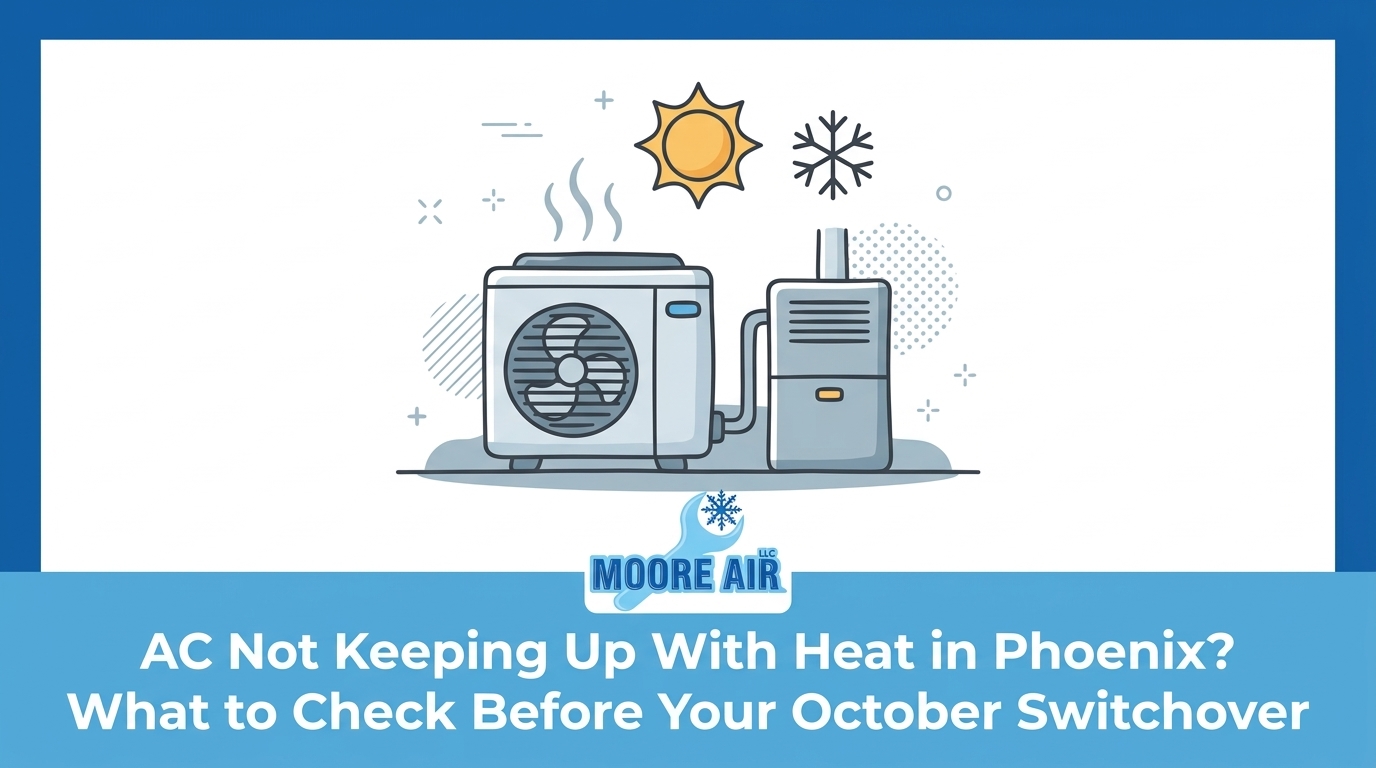
AC Not Keeping Up With Heat in Phoenix? What to Check Before Your October Switchover
Is Your HVAC System Ready for the Fall Switchover After a Brutal Phoenix Summer?
As you start crossing items off your seasonal home maintenance checklist, are you dreading that first chilly morning when you finally flip your thermostat from cooling to heating? You are not alone. Transitioning from 110+ degree West Valley summer days to late October nights dropping into the 50s places an incredible amount of stress on your heating and cooling equipment. After running almost nonstop for eight straight months to battle the desert heat, your system is suddenly asked to reverse its entire operation. This sudden shift often triggers anxiety for homeowners, especially when they are met with strange burning smells or vents blowing cold air instead of warm. Knowing how to tell the difference between a normal seasonal transition and a mechanical failure is the key to keeping your home comfortable as the weather shifts.
For comprehensive air conditioning services and reliable AC repair in Litchfield Park, Moore Air is here to help your system make the late October heating switchover smoothly and safely.
The Reality of the Desert Climate Transition
Most standard heating guides assume a gentle transition into autumn, but the West Valley climate is entirely different. Your equipment does not get a mild shoulder season to rest. Instead, it goes from running at maximum capacity to combat extreme heat straight into demanding heating cycles. This abrupt change is exactly why the late October heating switchover reveals so many hidden issues. Components that have been locked in a single position since February are suddenly forced to move, and electrical parts that have endured months of high-temperature stress are asked to pull heavy amperage to heat your home.
Common fears during the first startup:
- The burning dust smell: A sudden, sharp odor that makes many homeowners worry about electrical fires.
- Delayed warm air: Vents blowing cool air for several minutes before the heat finally kicks in.
- Unusual noises: Groans, clicks, or shifting sounds coming from the outdoor unit as valves change position.
Understanding the mechanical reasons behind these symptoms will help you approach your fall maintenance with confidence rather than panic.
Why Was Your AC Not Keeping Up With Heat in Phoenix During the Summer?
To understand why your system might struggle during the fall switchover, you have to look at what it endured over the summer. In Litchfield Park and the surrounding West Valley, most homes rely on heat pumps. A heat pump is a dual-purpose system. It does not just heat your home in the winter; it acts as your air conditioner all summer long. Because West Valley HVAC systems endure a uniquely extreme cooling season compared to standard units in other climates, your heat pump has been working overtime.
One customer in Litchfield Park reached out to us during the summer because their aging air conditioning machine needed immediate repair and they were desperate for maintenance advice. Our technician arrived, fixed the air conditioner quickly, and spent time explaining how to improve the system’s longevity. A major part of that conversation involved explaining the sheer mechanical toll the cooling season takes on dual-purpose equipment. When you understand why your AC runs non-stop during Phoenix summer afternoons, it becomes clear why the fall transition is so demanding.
The Mechanical Toll on Your Reversing Valve
The heart of a heat pump’s ability to switch between cooling and heating is a component called the reversing valve. This heavy-duty brass valve uses an internal slider to literally reverse the flow of pressurized refrigerant through your system. During our brutal eight-month cooling season, that slider sits firmly locked in the cooling position. Day after day, week after week, extreme heat and high pressure flow through it. By the time the late October heating switchover arrives, the lubrication inside that valve may have settled, and the internal components can become stiff or sticky. When your thermostat finally sends the 24-volt signal to shift into heating mode, the valve has to overcome months of inertia.
The Hidden Buildup on Auxiliary Heating Strips
While your heat pump is busy cooling your home, its auxiliary heating components sit completely idle. Most heat pumps feature backup electric heat strips located inside the indoor air handler. Even if you change your air filter regularly, microscopic particles of dust, pet dander, and household debris bypass the filter over the course of eight months. Because the heat strips are turned off all summer, they act as a magnet for this settling dust. By the time fall arrives, those metal coils are coated in a fine layer of debris, setting the stage for the most common—and most alarming—symptom of the season.
Decoding the Burning Dust Smell: Is It an Emergency?
When you turn on your heat for the first time in late October, the most immediate thing you will likely notice is a distinct burning smell. For many homeowners, this triggers an immediate panic. However, part of our no-games approach at Moore Air is giving you honest troubleshooting advice that prevents unnecessary service calls. In the vast majority of cases, a brief burning smell during the first heating cycle of the year is completely normal and does not require a paid professional visit.
The science behind the smell: When your system shifts into heating mode, those auxiliary electric heat strips we mentioned earlier power on. They get incredibly hot very quickly. The fine layer of dust and dander that accumulated on them throughout the long cooling season instantly oxidizes—or burns off. Because your blower motor is pushing air directly over those strips and into your ductwork, that burnt-dust smell is carried into every room of your house simultaneously.
If you want to ensure your system is clean before this happens, scheduling professional AC maintenance before the switchover can help minimize the buildup. But if you do encounter the smell, how do you know when it is safe to just open a window, and when you need to shut the system down?
Normal Seasonal Transition vs. Potential Electrical Hazard
Use this guide to determine if the odor coming from your vents is a standard late October heating switchover quirk or a sign of a failing component.
| Symptom | Normal Burn-Off | Potential Electrical Hazard |
|---|---|---|
| Duration of Smell | Dissipates within 15 to 30 minutes of continuous operation. | Persists for hours or returns every time the heat kicks on. |
| Type of Odor | Smells specifically like dry, burning dust or scorched lint. | Smells like melting plastic, burning rubber, or an electrical short. |
| Visual Signs | No visible smoke; just the odor circulating through the rooms. | Visible smoke coming from the vents or the indoor air handler unit. |
| Auditory Signs | Standard blower motor sounds and normal airflow noise. | Buzzing, popping, or loud sparking noises near the indoor equipment. |
The quick fix: If you are experiencing the normal burn-off smell, simply open a few windows to let the house air out, and allow the system to run for about half an hour. The smell should clear completely. If you smell melting plastic or see smoke, turn the system off at the thermostat immediately, flip the breaker to the HVAC unit, and call for professional diagnostic help.

Troubleshooting a Heat Pump That Blows Cold Air in the Fall
The second most common issue Litchfield Park and surrounding West Valley homeowners face during the fall switchover is a heat pump that refuses to blow warm air. You set the thermostat to heat, the system kicks on, but the air coming out of the vents feels just as cold as it did in July. When this happens, the most likely culprit is a stuck reversing valve.
As we discussed earlier, the reversing valve is responsible for changing the direction of the refrigerant. After sitting in the cooling position for eight months under the intense pressure of the desert transition stress on dual-purpose units, the internal slider can physically jam. The thermostat sends the signal, the solenoid clicks, but the mechanical valve simply cannot push past the friction. As a result, your system continues to operate in cooling mode, even though your thermostat is asking for heat.
Checking Your Thermostat Settings Before Pushing Panic
Before you assume the reversing valve has failed, you should always verify your thermostat settings. It sounds simple, but modern smart thermostats can be highly sensitive and sometimes default to unexpected modes during seasonal changes.
- Verify the mode: Ensure the system is explicitly set to “Heat” and not “Auto.” In Auto mode, a warm afternoon might trick the system back into cooling.
- Check the set point: Make sure the target heating temperature is at least three degrees higher than the current room temperature to force the system to engage.
- Avoid “Emergency Heat”: Do not switch your thermostat to “Emergency Heat” just because the normal heat feels slow. Emergency Heat locks out the efficient heat pump entirely and relies solely on the expensive electric backup strips. This should only be used if the outdoor unit has completely failed.
If your settings are correct and the air remains cold after 15 minutes, you likely have a mechanical issue. You can consult an HVAC troubleshooter guide for basic airflow checks, but you must draw a hard line when it comes to the internal components.
A critical warning regarding DIY repairs: Never attempt to force a stuck reversing valve manually, and never open the electrical cabinet to test the solenoid yourself. The reversing valve operates under immense refrigerant pressure, and the solenoid handles high-voltage electricity. Tapping on the valve with a tool can rupture the copper lines, causing a massive chemical leak and permanently destroying the unit. Diagnosing and replacing a faulty reversing valve requires specialized gauges, recovery equipment, and a licensed professional.
Frequently Asked Questions About Fall Heat Pump Maintenance
Why does my heater smell like burning dust?
Your heater smells like burning dust because microscopic debris settles on your auxiliary heat strips during the long cooling season. When you trigger the late October heating switchover, those strips heat up rapidly, instantly burning off the accumulated dust. This oxidation process creates a strong odor that is pushed through your ductwork by the blower motor. Fortunately, this is a completely normal part of the seasonal transition, and the smell should dissipate naturally within 15 to 30 minutes of continuous operation.
Why is my heat pump blowing cold air?
Your heat pump is likely blowing cold air because the reversing valve is stuck in the cooling position after months of uninterrupted summer use. It could also be that the system has temporarily entered a normal defrost cycle to melt frost off the outdoor coils, during which it briefly blows cool air. However, if the cold air persists for more than 20 minutes and your thermostat is correctly set to “Heat,” the reversing valve or its electrical solenoid has likely failed and requires a professional technician to diagnose.
What should I check before turning my heat on for the winter?
Before turning your heat on, you should always replace your indoor air filter to ensure proper airflow and prevent the blower motor from straining. You should also walk outside and clear any overgrown vegetation, fallen leaves, or debris away from the outdoor unit so it can breathe easily. Finally, it is highly recommended to test your system on a mild autumn day before the nighttime temperatures drop drastically, ensuring you have time to call for help if the system fails to switch over.
How does the intense summer heat affect my heat pump’s fall startup?
The intense summer heat severely degrades electrical capacitors and wears down mechanical contacts due to continuous, high-stress operation. Moving parts, like the internal slider of the reversing valve, can lose their lubrication after sitting in a single position for eight months. When the fall transition requires a sudden mechanical shift, these worn, unlubricated parts are forced into action, which often leads to sticking valves, blown fuses, or delayed startups during the first cold night.
Can a stuck reversing valve fix itself?
Occasionally, cycling the thermostat back and forth between cooling and heating a few times can unstick a minor mechanical jam in the reversing valve. However, a valve that sticks once usually indicates a failing solenoid coil or severe internal mechanical wear that will only get worse. Even if you manage to unstick it temporarily, the underlying friction remains, and professional diagnosis is required to prevent a total system failure when you need the heat the most.
Schedule Your Pre-Winter Inspection with a Local Expert
Navigating the late October heating switchover doesn’t have to be a stressful guessing game. While some startup quirks—like a brief burning dust smell—are completely normal, persistent cold air or electrical odors require immediate attention. In Litchfield Park and surrounding West Valley neighborhoods, your heat pump has already worked incredibly hard to keep you comfortable through the summer. Giving it a thorough checkup before the winter cold sets in is the best way to protect your investment and ensure your family stays warm.
If your system is struggling to transition, don’t wait for a freezing night to find out it has failed completely. Moore Air is known for fast response times for West Valley residents needing prompt, honest repairs. Secure your peace of mind today by scheduling AC repair in Litchfield Park or a comprehensive pre-winter inspection, and let our experts ensure your home is ready for whatever the season brings.