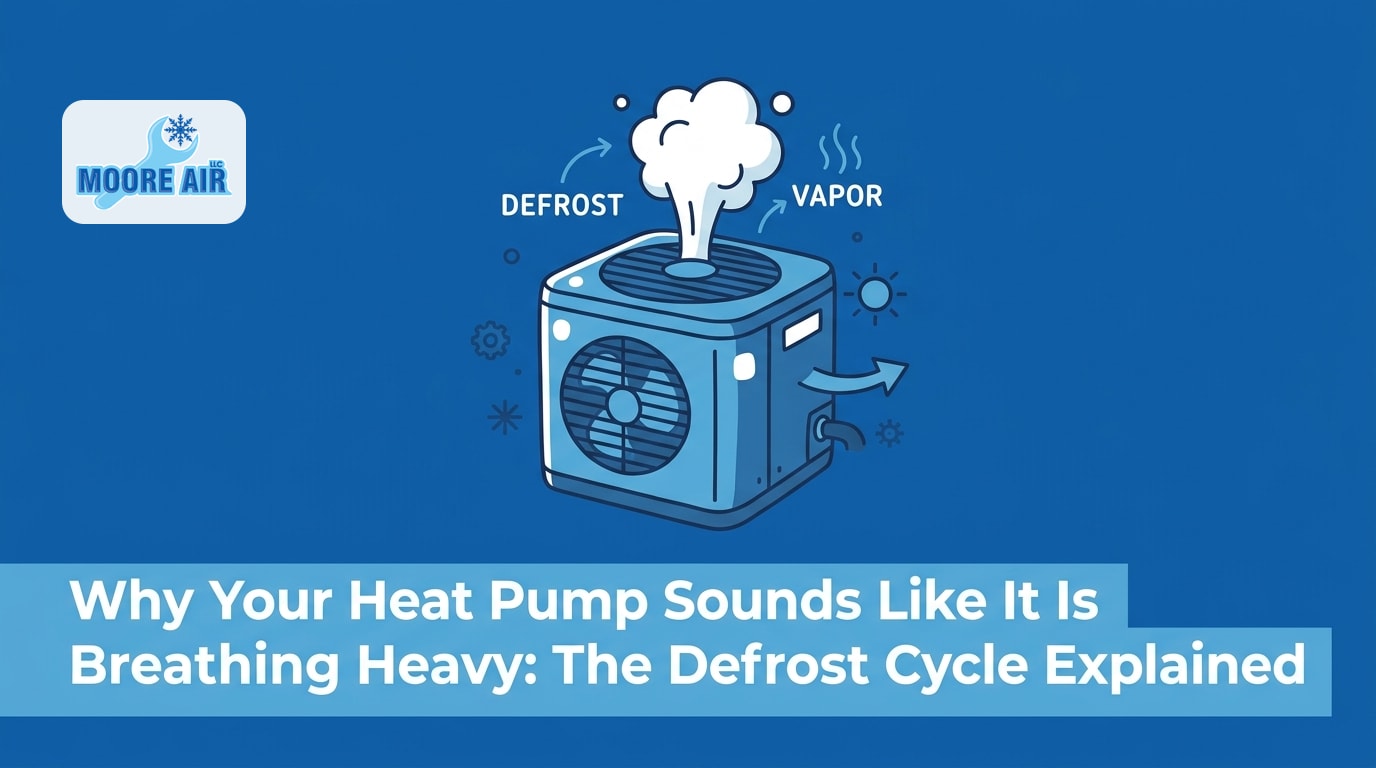
Why Your Heat Pump Sounds Like It Is Breathing Heavy: The Defrost Cycle Explained
Startled by a Loud Whoosh? The Sudden Panic of Morning Heating
You step out of bed, bump the thermostat up a few degrees, and suddenly your heat pump sounds like it is breathing heavy. Having the heat pump defrost cycle explained is usually the last thing on your mind when you are jolted awake by a loud, rushing whoosh coming from your backyard equipment. For most homeowners, this sudden mechanical sigh triggers immediate panic. You might wonder if the compressor just blew a seal, if a refrigerant line burst, or if the entire system has completely broken down right when you need it most.
Before you rush to the phone to call for emergency HVAC services, take a deep breath. That startling noise is almost certainly a normal, built-in function designed to protect your equipment from severe damage. Heat pumps are incredibly efficient machines, but they require a self-preservation mode to deal with ice buildup on their outdoor components. When your heat pump sounds like it is breathing heavy, you are actually hearing the system successfully shifting gears to take care of itself. Understanding what triggers this self-cleaning mechanism is the first step toward peace of mind during the colder months.
The Desert Winter Surprise: Why Frost Forms Without Snow
There is a common misconception that defrost cycles only happen in snowy, deep-winter climates like the Midwest or the Northeast. If you live in an arid region, you might assume your equipment is immune to freezing. However, the reality of high diurnal temperature variation tells a different story. During November chilly desert mornings, it is entirely common for outdoor equipment to freeze up, catching first-time seasonal heating users completely off guard.
The science behind this desert winter surprise comes down to condensation and rapid temperature drops. Even when daytime temperatures are perfectly mild and sunny, the overnight hours can plummet rapidly. As the ambient temperature drops below 40 degrees Fahrenheit, the outdoor coil of your unit actually drops even colder—often dipping below the freezing point of water. Any residual moisture in the desert air condenses onto these freezing coils, rapidly turning into a layer of white frost.
If this frost is left unchecked, it will eventually form a solid block of ice, suffocating the outdoor unit and preventing it from absorbing any ambient heat to transfer inside your home. This is why your system must initiate a defrost cycle. It is a vital process for maintaining efficiency and preventing mechanical failure. If you are relying on heat pump services to keep your home comfortable, understanding this rapid overnight cooling pattern is essential. The frost forms not because it is snowing, but because the metallic coils are actively pulling heat out of cold, slightly humid night air, leaving frozen condensation behind.
The Mechanics Behind the Noise: Heat Pump Defrost Cycle Explained
To truly understand why your unit makes such alarming sounds, we need to look under the hood at the mechanical processes taking place. At the heart of every heat pump is a component called the reversing valve. This heavy-duty brass valve is responsible for shifting the flow of refrigerant, allowing the system to provide both heating and cooling from the exact same footprint.
The Role of the Reversing Valve
During normal winter operation, your heat pump absorbs ambient heat from the outdoor air and compresses it to warm your home. But when the system’s sensors detect that frost is accumulating on the outdoor coil, the control board sends a 24-volt signal to the reversing valve. The valve slides into a new position, temporarily switching the heat pump back into air conditioning mode. By doing this, the system takes the hot, pressurized refrigerant gas that was destined for your indoor vents and reroutes it directly to the freezing outdoor coil.
Equalizing the Pressure
This brings us to the loud noise that startles so many Litchfield Park homeowners. When the reversing valve shifts, it is redirecting refrigerant that is under immense pressure. The loud “whoosh” or heavy breathing sound is simply the system pressure rapidly equalizing as the flow of refrigerant reverses direction. It sounds violent, but it is a perfectly engineered release of pressure.
Once the hot refrigerant reaches the outdoor coil, it quickly melts the accumulated frost. A normal cycle lasts between 5 and 15 minutes. Once the sensors detect that the outdoor coil has reached an adequate temperature and the ice is gone, the reversing valve shifts back to its original position—often with another, slightly quieter whoosh—and normal heating resumes.
Four Sensory Signs of a Normal Defrost Cycle
When you hear strange noises coming from your HVAC equipment, it is easy to assume the worst. However, a normal defrost cycle produces very specific sensory outputs. If you observe the following four signs, your system is likely functioning exactly as the manufacturer intended.
- The Loud “Whoosh”: As mentioned, this is the initial sound of the reversing valve shifting and the refrigerant pressure equalizing. It may sound like a sudden release of compressed air or a heavy mechanical sigh.
- The Fan Stops: You will notice that the large fan blade on the top (or side) of your outdoor unit completely stops spinning. The system intentionally shuts this fan off so that the hot refrigerant can build up enough heat to melt the ice, rather than having the fan blow that valuable heat away into the yard.
- Steam Rises: As the hot refrigerant rapidly melts the ice on the cold coils, you will likely see a white plume rising from the unit. Homeowners often panic, thinking the motor is on fire. Rest assured, this is just harmless water vapor (steam), not smoke.
- Temporary Cool Air: Because the system has temporarily switched into air conditioning mode to send heat outdoors, your indoor vents may briefly blow lukewarm or cool air. Many systems utilize auxiliary heat strips to counteract this, but a slight drop in indoor vent temperature for a few minutes is entirely normal.

Honest Diagnostics: When to Wait and When to Call a Pro
While the heavy breathing sounds and plumes of steam are usually harmless, there are times when a heat pump truly is struggling. As part of a “no games” ethos, an honest contractor wants you to know exactly what is normal so you aren’t tricked into paying for a fake emergency repair by less scrupulous technicians. Empowering yourself with a few basic diagnostic rules can save you from unnecessary diagnostic fees.
The 15-Minute Rule
The most important troubleshooting step you can take is to practice patience. We recommend the 15-minute rule: if your system starts making a loud whooshing noise and blowing cool air, set a timer for 15 minutes. In the vast majority of cases, the system will clear its coils, shift the reversing valve back, and return to blowing warm air before the timer goes off. If you are interested in learning more about seasonal shifts, mastering troubleshooting your heat pump for the fall transition is a great way to build confidence in your equipment.
When to Actually Worry
If the timer expires and the system is still stuck in a defrost state, or if you notice other alarming symptoms, it may be time to seek professional HVAC troubleshooting. Never attempt DIY ice removal. Do not chip at the ice with tools, screwdrivers, or scrapers, as the aluminum fins and copper tubing are incredibly fragile and easily punctured. Likewise, never pour hot water over a freezing electrical appliance.
Normal Operation vs. Malfunction
| Observation | Normal Defrost Cycle | System Malfunction (Call a Pro) |
|---|---|---|
| Ice Coverage | A thin layer of white frost that melts away within 15 minutes. | A solid, thick block of ice encasing the entire unit for hours. |
| Sounds | A loud whoosh, heavy breathing, or swoosh at the start and end. | Harsh metal-on-metal grinding, screeching, or continuous banging. |
| Air Temperature | Brief period (5-15 mins) of lukewarm or slightly cool air from vents. | Continuous cold air blowing indoors for over 30 to 40 minutes. |
| Visuals | Wisps of white steam rising from the top of the outdoor unit. | Dark smoke or a strong electrical burning smell near the unit. |
How to Support Your System During Late Fall Cold Snaps
Even though your equipment is designed to handle cold snaps automatically, there are several proactive steps you can take to make the process easier on the machinery. Supporting your system during November chilly desert mornings ensures that it doesn’t have to work harder than necessary, which ultimately protects your utility bills and the lifespan of the compressor.
- Keep the outdoor unit clear: Fall leaves, desert debris, overgrown landscaping, and tumbleweeds can easily accumulate around the base of your outdoor unit. Ensure there is at least two feet of clear space around all sides. Proper airflow is critical; if the unit cannot pull in enough air, it will freeze up much faster and struggle to defrost effectively.
- Do not interrupt the thermostat: When homeowners feel cool air coming from the vents during a defrost cycle, their first instinct is often to turn the thermostat off. Doing this interrupts the ice-melting process midway through. Leave the thermostat alone and let the control board finish its programmed cycle.
- Ensure all indoor vents are open: Closing vents in unused rooms doesn’t save energy; it actually increases the static pressure inside your ductwork, making the blower motor work harder and disrupting the delicate pressure balance required for efficient heating. Keep all vents open and unblocked by rugs or furniture to support energy efficient heating.
- Schedule seasonal maintenance: The best way to prevent severe icing issues is to have a professional inspect the system before the deepest winter temperatures arrive. Low refrigerant levels, failing sensors, or a sticky reversing valve can all cause a heat pump to freeze up inappropriately. A proactive tune-up catches these issues early.
Rest Easy This Winter with Reliable Heating Knowledge
Hearing your heat pump sound like it is breathing heavy can be an alarming experience, especially when you are just trying to warm up your Litchfield Park home on a brisk morning. But by understanding the mechanics of the reversing valve and the reality of desert temperature drops, you can rest easy knowing that this loud whoosh is a sign of a healthy, self-regulating system.
The peace of mind that comes with understanding your equipment’s quirks is invaluable. You no longer have to panic when you see steam rising from the outdoor cabinet or feel a brief draft of cool air. However, if your system ever crosses the line from normal operation into the malfunction signs we discussed—such as grinding noises or a solid block of ice that refuses to melt—do not hesitate to reach out to a licensed professional for an honest evaluation.
Frequently Asked Questions
How do I know if my heat pump is in defrost mode?
You can usually tell your heat pump is in defrost mode by observing a few key sensory signs. The outdoor fan will stop spinning, you may hear a loud whooshing noise, and steam might rise from the outdoor unit. Additionally, the air coming from your indoor vents may temporarily feel cooler than normal. This entire process typically resolves itself within 15 minutes.
Why is my heat pump making a loud whoosh sound?
The loud whoosh sound is caused by the reversing valve shifting the flow of refrigerant. When the system detects frost, it redirects highly pressurized, hot refrigerant gas from your indoor coils to the outdoor coils to melt the ice. The noise you hear is simply the system pressure rapidly equalizing as the valve changes position.
Is it normal for a heat pump to smoke in winter?
It is normal to see a white plume rising from your heat pump in winter, but this is actually steam, not smoke. As the hot refrigerant melts the frost on the outdoor coils, the rapid temperature change creates water vapor. As long as it is white, odorless, and dissipates quickly in the air, it is completely harmless steam.
How often should a heat pump go into defrost cycle?
The frequency of a defrost cycle depends entirely on the outdoor temperature and humidity levels. In cold, damp conditions, a heat pump might initiate a cycle every 30 to 90 minutes of active running time. On drier days, it may rarely happen at all, as there is less moisture in the air to condense and freeze on the coils.
Why is my heat pump blowing cold air during defrost?
During a defrost cycle, the heat pump temporarily switches into air conditioning mode to send hot refrigerant outdoors to melt the ice. Because the heat is being sent outside, the indoor coil becomes cold, resulting in a brief period of cool air blowing from your vents. Once the ice is melted, the system will switch back to heating mode.
Can I manually stop the heat pump defrost cycle?
You should never manually interrupt a defrost cycle by turning off the thermostat or cutting power to the unit. Stopping the cycle prevents the system from fully melting the ice, which can lead to a solid block of ice forming over time. This severe ice buildup can restrict airflow, damage the fan blades, and eventually cause the compressor to fail.