Why Blocking Return Vents With Furniture Causes Immediate Furnace Overheating During the Holidays
The Hidden Heating Risk of Expanding the Thanksgiving Dining Table
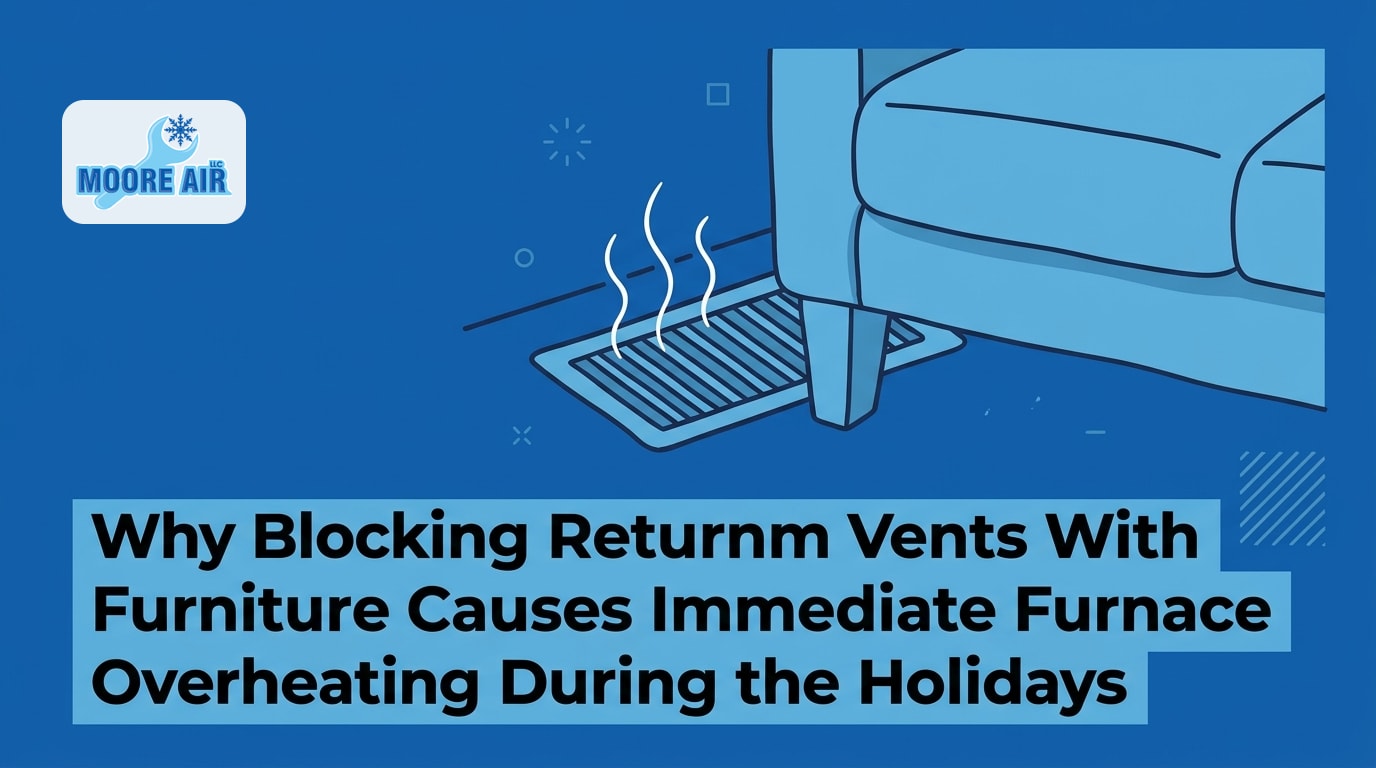
Thanksgiving is just around the corner, and preparing your home for a houseful of guests usually means shifting things around to make room. At Moore Air, we’ve spent years responding to frantic “no heat” calls right before Thanksgiving dinner in Litchfield Park, and the culprit is often surprisingly simple. Blocking return vents with furniture to accommodate an extended dining table or a temporary guest bed is a recipe for a sudden heating failure. It is incredibly common for homeowners to unintentionally cover a large floor or low-wall grate while maximizing floor space for the holidays. What seems like a harmless layout adjustment can actually starve your heating system of air, causing the furnace to overheat and shut down right when you need it most.
If you are looking to ensure your system is ready for the holidays, our team provides comprehensive furnace services to keep your home warm and welcoming.
When late fall arrives, hosting duties take center stage. You are likely focused on seating charts, grocery lists, and ensuring everyone has a comfortable place to sleep. In the rush to fit an extra leaf into the dining table or set up a folding table for the kids, furniture routinely gets pushed against walls and over floor grates. The immediate concrete problem is finding a balance between maximizing your walkable floor space and maintaining proper airflow for your heating system.
Most homeowners do not realize that their HVAC system requires a massive, uninterrupted flow of air to function. When a large piece of furniture, a heavy rug, or a floor-length tablecloth covers a main vent, the system suffocates. This simple seasonal furniture shift is actually one of the leading causes of sudden furnace shutdowns during the Thanksgiving holiday. Before you finalize your seating arrangement, it is critical to understand how your home breathes and why your furnace relies on that open space.
Understanding Your Home’s Airflow: Supply vs. Return Vents
To understand why furniture placement matters so much, you have to know the difference between the vents that blow hot air and the vents that pull air back into the system. In our experience servicing heating systems throughout the West Valley, we know that every forced-air system operates on a closed loop, relying on a delicate balance of pushing and pulling to maintain a comfortable temperature.
Supply vents (registers): These are the smaller grates typically located near windows, along baseboards, or in the ceiling. Their job is to push conditioned, heated air into the room. You can usually feel a strong breeze when you hold your hand over them.
Return vents: These are the much larger, centrally located grilles that pull air from the house back into the HVAC system to be filtered and heated again. They do not blow air out; they draw air in.
Think of return vents as the lungs of your heating system. They require a massive, continuous volume of air to function correctly. In many Litchfield Park homes, these large return grilles are strategically placed in main hallways, large living rooms, or open-concept dining areas. Because they are located right where families gather, they become prime targets for accidental blockage when rearranging for guests.
| Vent Type | Typical Location | Primary Function | Impact if Blocked |
|---|---|---|---|
| Supply Register | Near windows, outer walls, ceilings | Pushes warm air into the room | Cold spots in that specific room, minor pressure changes |
| Return Grille | Central hallways, living room floors/walls | Pulls air back to the furnace | System-wide starvation, rapid overheating, safety shutdowns |
Why Central Returns Are Vulnerable During Gatherings
High-traffic areas are the first spaces to be repurposed during large family gatherings. A spacious hallway suddenly becomes the perfect spot for a temporary coat rack, a buffet table, or a stack of luggage. The living room corner gets filled with an inflatable mattress for out-of-town guests.
Because return grilles do not blow air, homeowners often mistakenly believe they are inactive, broken, or simply less important than the vents blowing warm air. In our daily service calls, a pattern we see often is homeowners assuming that covering a “dead” vent will not hurt anything. In reality, choking off a central return vent is much more dangerous to your furnace than covering a single supply register, as it cuts off the air supply for the entire heating cycle.
The Science of Blocking Return Vents With Furniture
When you block a return vent, you are directly interfering with the mechanical physics of your HVAC system. Your furnace and ductwork are carefully balanced for a specific volume of intake and output, a measurement known in the industry as static pressure.
Our Moore Air technicians frequently see the mechanical fallout of this. When you starve the blower motor of incoming air by placing a couch or a solid table over the grate, the static pressure inside the ductwork spikes. The blower motor has to work much harder, struggling to pull air through a restricted opening. Because there is not enough cool air flowing over the heat exchanger—the internal metal component that actually heats the air—the internal temperature of the furnace skyrockets.
The immediate consequence is that the heat exchanger rapidly overheats. The trapped heat cannot be pushed into the ductwork fast enough. To prevent a severe fire hazard or a cracked heat exchanger, your furnace is equipped with a safety mechanism called a high-limit switch. When the internal temperature crosses a dangerous threshold, this switch automatically shuts down the furnace burners to protect the equipment and your home.
While Litchfield Park days are often mild and pleasant, the chilly November evenings create a sudden, heavy reliance on the furnace just as your guests arrive. Having your heating system shut down in the middle of dinner because a table is suffocating the vent is a major hosting disaster. If you are worried about the long-term effects of poor airflow on your home’s environment, professional indoor air quality services can help assess and optimize your home’s ventilation.
The Ripple Effect on Air Quality and Comfort
Restricted airflow does more than just threaten your furnace’s mechanical parts. When the return vent is blocked, the system cannot pull enough air through the air filter. This bypasses your system’s filtration capabilities, leaving dust, pet dander, and cooking odors lingering in the home.
Stagnant air during a crowded holiday party can quickly degrade indoor comfort. Without proper circulation, the house will feel stuffy, humid, and uncomfortable long before the furnace actually shuts down from overheating. Keeping those vents clear ensures the air remains fresh and properly filtered for your guests.
The 10-to-18 Inch Clearance Rule for Holiday Furniture
To keep your system running smoothly through Thanksgiving and late fall, our team always recommends following a strict standard guideline: you must maintain at least 10 to 18 inches of clearance around all return vents.
This buffer zone is non-negotiable. It allows the HVAC system to pull air from the room naturally without creating a vacuum effect against the furniture. When items are placed too close, the suction can actually pull lightweight fabrics or dust directly against the grille, further restricting the flow and making the blower motor work overtime.
Here is a checklist for managing common holiday items around your vents:
- Folding tables and buffets: Keep the solid sides of temporary tables at least 18 inches away from wall returns to prevent air blockages.
- Inflatable guest beds: Never place an air mattress directly on top of a floor return. The solid plastic completely seals the vent and will cause an immediate system shutdown.
- Temporary seating: Chairs with open legs are generally safer than solid couches, but you must still ensure the solid base of the seat does not sit directly over the grate.
- Holiday rugs and mats: Do not use decorative rugs to hide unsightly floor grates. Even a thin rug acts as a complete barrier to airflow.
It is important to clarify that even furniture with legs, like a standard dining table, can disrupt airflow if you add floor-length tablecloths. Once the fabric drapes down to the floor, it creates a tent effect that traps the air and blocks the return vent just as effectively as a solid piece of wood.

Is Your Furnace Short-Cycling? How to Tell if Furniture is the Culprit
If your furnace turns on, runs for just a few minutes, blows mildly warm or cool air, and then shuts off prematurely, it is experiencing a common issue known as short-cycling. During the late fall hosting season, this is often the first symptom of a blocked return vent.
Short-cycling happens when the high-limit switch trips due to overheating, shuts the system down to cool off, and then tries to restart the cycle once temperatures drop. Before you assume the system is permanently broken and panic, walk through your home and check your main return vents. Look for tables, heavy rugs, guest luggage, or inflatable beds that might have been shifted during cleaning or party prep.
At Moore Air, our team has diagnosed countless short-cycling furnaces across Litchfield Park, and we believe in an honest diagnostic approach. We always want to educate you to check for these simple blocked vents first. The last thing we want is for you to pay an unnecessary emergency fee during a holiday for an issue you can fix by simply sliding a suitcase a few feet to the left. If you clear the obstruction and the system still struggles, that is when you need professional furnace repair to identify the deeper mechanical issue.
Steps to Safely Reset Your System
If you suspect furniture is causing your furnace to short-cycle, follow these steps to safely reset your heating cycle:
- Clear the perimeter: Move all furniture, boxes, luggage, and fabrics to establish a strict 18-inch clearance zone around the return vent.
- Check the air filter: A severely clogged filter compounds the airflow problem. Pull the filter out, inspect it, and replace it immediately if it is dirty or grey.
- Reset the thermostat: Turn the heating system off at the thermostat for a few minutes to let the furnace cool completely, then turn it back on to “heat” mode.
- Monitor the cycle: Listen to the next heating cycle to see if normal, sustained operation resumes without the system shutting off prematurely.
Safe Furniture Layout Strategies for Fall Hosting
You can absolutely accommodate a large number of guests without compromising your HVAC system. It just requires a bit of strategic planning when setting up your fall hosting layout. With a few smart adjustments, you can keep your home spacious and your furnace safe.
A strategy our team highly recommends if your dining room features a large return grate on the floor or low on the wall, is to try angling the dining table parallel to the vent rather than placing it directly over the grate. This allows you to maximize your seating capacity while keeping the critical airflow path completely unobstructed.
For smaller supply registers that blow air, you can sometimes use clear plastic vent deflectors to direct warm air out from under a couch or cabinet. However, you must remember that deflectors should never be used to cover or redirect a main return vent. Returns need unobstructed, straight-line access to the ambient room air to pull the necessary volume.
If you are using a festive, floor-length tablecloth for Thanksgiving, keep the fabric pinned or tied back on the side facing the return grille. This simple trick hides the vent from view without suffocating the system behind a wall of fabric.
Finally, remember to apply these same clearance rules when setting up temporary sleeping arrangements. Whether you are converting a home office or utilizing a spare room, checking HVAC airflow for guest rooms ensures your visitors stay warm and your furnace stays safe throughout the entire holiday season.
When Moving the Table Isn’t Enough: Troubleshooting Persistent Issues
Sometimes, unblocking the vent does not resolve the short-cycling. If you have cleared the 18-inch perimeter, replaced the filter, and the furnace still shuts down after a few minutes, it indicates a deeper mechanical or airflow issue that requires professional attention.
When our team at Moore Air gets called out for persistent short-cycling issues, we often find that when a furnace overheats repeatedly because a vent was blocked for too long, the high-limit switch can actually become damaged. A weakened switch will trip prematurely, even when the furnace is operating at safe temperatures. Additionally, underlying issues like dirty blower wheels, severely clogged secondary filters, or crushed ductwork can mimic the exact symptoms of a blocked vent.
| Symptom | Potential Cause | Next Step |
|---|---|---|
| Furnace shuts off after 3 minutes | Blocked return vent or dirty filter | Clear 18-inch space, change filter, monitor |
| Continues short-cycling after clearing | Damaged high-limit switch | Schedule professional diagnostics |
| Weak airflow from all supply vents | Dirty blower wheel or duct issue | Request system inspection and cleaning |
Persistent overheating is a serious issue that requires professional diagnostics. A technician needs to evaluate the system to ensure the heat exchanger has not been compromised by the repeated temperature spikes. Because Litchfield Park relies on dependable heating when the sun goes down, we highly recommend having persistent issues evaluated before the peak of winter arrives.
If your ductwork is contributing to the pressure imbalance, professional duct work services can restore proper airflow, seal leaks, and protect your heating equipment from future strain.
Ensure Reliable Heating for Your Holiday Guests
A simple layout adjustment is often all it takes to ensure your furnace has the air it needs to run safely. By respecting the 18-inch clearance rule and keeping your large return vents completely unobstructed, you can keep your home warm and comfortable for everyone gathered around the table.
Addressing airflow issues proactively is the best way to prevent unexpected hosting disasters during Thanksgiving and late fall. Do not wait until the house is full of guests and the temperature is dropping to find out your system is struggling to breathe.
If you suspect underlying airflow problems or if your furnace continues to short-cycle after clearing your vents, schedule a pre-holiday inspection today to guarantee a stress-free season.
Frequently Asked Questions
What happens if you block a cold air return?
Blocking a cold air return starves your HVAC system of the air it needs to operate. This causes the static pressure inside the ductwork to spike, forcing the blower motor to overwork. Ultimately, the lack of airflow causes the furnace’s heat exchanger to overheat, triggering a safety shutdown.
How far should furniture be from a return vent?
You should maintain a minimum clearance of 10 to 18 inches around all return vents. This buffer zone prevents the system from creating a vacuum effect that pulls fabrics or dust against the grille. Keeping this space clear ensures the furnace can draw in a sufficient volume of air without strain.
Does blocking vents damage the furnace?
Yes, repeatedly blocking vents can cause long-term damage to your furnace. The continuous overheating places severe stress on the heat exchanger, which can eventually crack. It also wears out the high-limit safety switch and drastically shortens the lifespan of the blower motor.
Can you put a couch over a return vent?
You should never place a solid couch directly over a return vent. Even if the couch has legs, the small gap underneath is usually not enough to allow proper airflow for a large central return. If you must place seating near a vent, ensure the solid base is at least 18 inches away from the grille.
Why does my furnace shut off when I host large gatherings?
Your furnace is likely shutting off due to a tripped high-limit switch caused by restricted airflow. During large gatherings, homeowners often move tables, luggage, or inflatable beds over central return vents to make room. This accidental blockage starves the furnace, causing it to overheat and shut down for safety.
Are floor return vents different from supply registers?
Yes, floor return vents are fundamentally different from supply registers. Supply registers are smaller and actively push heated air into the room, while return vents are much larger and pull air back into the system. Return vents act as the intake lungs of the HVAC system and are critical for preventing overheating.