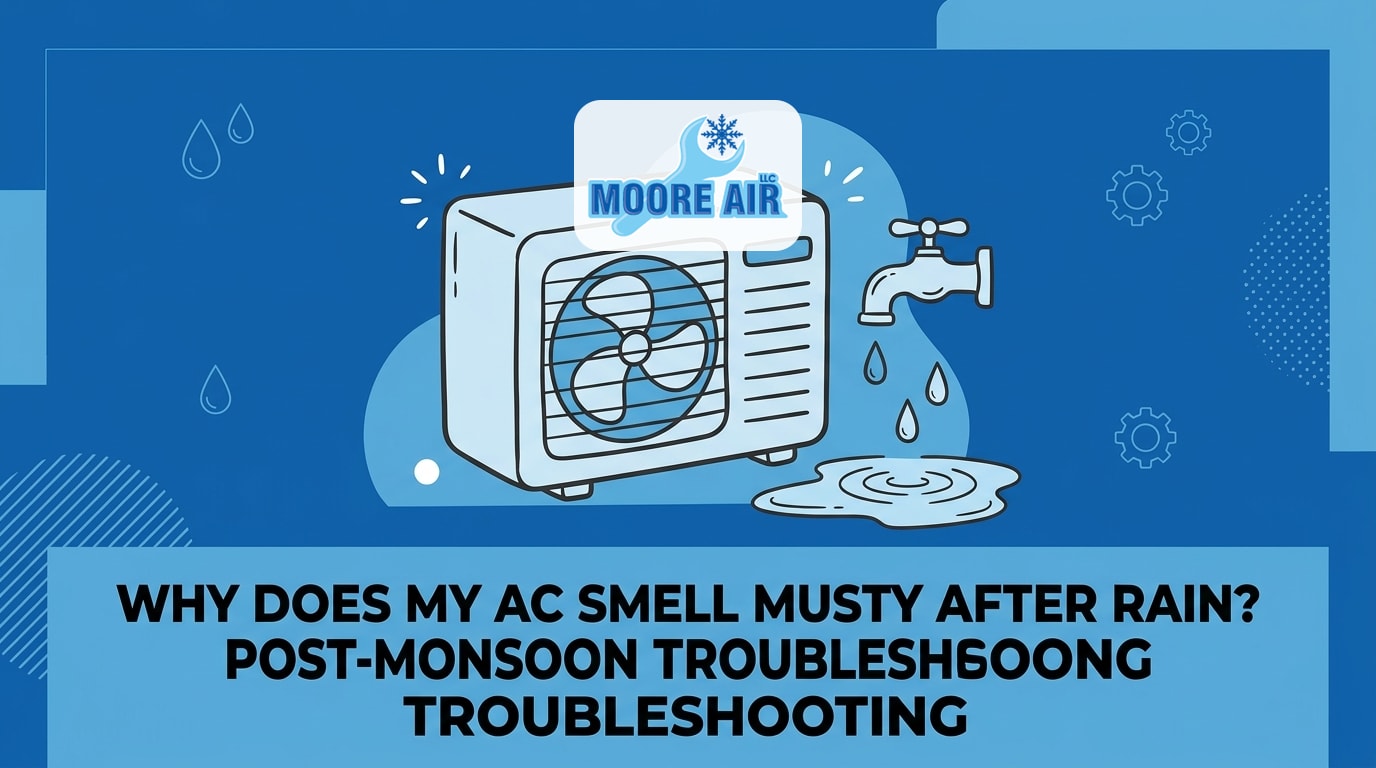
Why Does My AC Smell Musty After Rain? Post-Monsoon Troubleshooting
Is That Musty Smell Coming From Your AC After a Rainstorm?
Have you been searching for reliable home maintenance tips and troubleshooting because your AC smells like a damp basement right after a heavy downpour? Here at Moore Air, LLC, we can assure you that you are not imagining things, and the issue will not resolve itself by simply running the system longer. It is a very specific, concrete problem that many homeowners face when the seasons begin to shift. The sudden transition from months of bone-dry extreme heat to late-summer monsoon humidity creates the perfect storm for moisture buildup inside your ductwork and air handler.
As we experience October desert temperature swings, your HVAC system is forced to work under rapidly changing conditions. During the day, it battles lingering heat, while at night, it prepares for cooler temperatures. Running an uninspected, moisture-laden system during this fall transition poses a significant risk to your equipment. That wet-dog odor blowing through your vents is a clear indicator of trapped moisture, signaling that your system requires professional attention before winter weather settles in.
If you need immediate assistance resolving persistent odors or preparing your system for the cooler months, explore our Air Conditioning Services or schedule an Air Conditioner Repair today.
The Monsoon Effect: How Arizona Weather Traps Moisture in Your HVAC
To understand why your air conditioner suddenly smells like a wet towel, you have to look at the unique environmental stress your system endures throughout the year. The local climate creates a highly specific sequence of events that directly impacts the internal components of your cooling equipment.
The Problem: Extreme Dry Heat and Dust
For six solid months, your air conditioner operates in extreme, dry heat. During this extended period, the system pulls in massive amounts of air to keep your home comfortable. Even with high-quality air filters in place, fine desert dust manages to bypass the filtration system. In our years of serving Litchfield Park, AZ, our technicians have seen how intense summer dust storms—known as haboobs—force ultra-fine particulate matter deep into the outdoor condenser and the indoor air handler. This dry dust settles onto the delicate aluminum fins of your evaporator coil, coating the internal mechanics in a fine, powdery layer.
The Cause: Torrential Monsoon Rains
When late-summer monsoon rains finally arrive, they introduce a sudden, massive spike in humidity. Your air conditioner’s primary job, alongside cooling the air, is dehumidification. As the system pulls this heavy, moisture-laden air into the return vents, condensation forms rapidly on the cold evaporator coil. The previously dry dust that coated the coil instantly absorbs this moisture. Instead of washing away, the dust and condensation combine to form a thick, sticky sludge or mud right on the critical components of your system.
The Solution: Professional Remediation
This specific environmental combination makes local AC units highly susceptible to musty odors. The sludge acts as an insulating barrier, forcing your system to work harder to transfer heat, while simultaneously providing the perfect breeding ground for organic growth. Resolving this requires more than just waiting for the weather to dry out; it requires physically removing the mud from the sealed components of your HVAC system.
| Seasonal Phase | Weather Conditions | Impact on HVAC Internal Components |
|---|---|---|
| Early/Mid Summer | Extreme dry heat, haboobs, high winds | Ultra-fine dust coats the evaporator coil and blower motor. |
| Late Summer Monsoon | Torrential rain, sudden humidity spikes | Moisture mixes with settled dust, creating thick sludge. |
| Fall Transition | Cooling at night, lingering heat by day | Sludge remains trapped inside, breeding bacteria and causing odors. |
Understanding Dirty Sock Syndrome During the Fall Transition
When we get calls about air blowing from vents that smells exactly like a gym locker, our Moore Air team knows the homeowner is likely experiencing a well-documented HVAC phenomenon known as Dirty Sock Syndrome. This is not a mechanical failure of a motor or a belt; it is a biological issue occurring deep inside your indoor air handler.
Dirty Sock Syndrome is defined as microbial growth on the indoor evaporator coil. As we discussed earlier, the combination of monsoon moisture and summer dust creates a nutrient-rich sludge on the coil. When spores from the air circulate through your home and land on this damp, dark surface, bacteria and mildew begin to thrive. The resulting off-gassing from this microbial growth produces the distinct, foul odor that fills your home whenever the blower fan engages.
This issue becomes particularly noticeable during the fall transition. October desert temperature swings require your HVAC system to rapidly switch between cooling during the warm afternoons and heating during the chilly nights. When the heat pump switches modes, the sudden change in temperature on the coil either rapidly burns off settled bacteria or creates a warm, humid environment that causes the microbial growth to multiply exponentially. This rapid temperature cycling exacerbates the smell, making it impossible to ignore.
Ignoring this odor is a mistake. Beyond the unpleasant smell, a fouled coil significantly reduces your system’s efficiency. The layer of biological growth acts as an insulator, preventing the refrigerant inside the coil from effectively absorbing or releasing heat. This forces your compressor to run longer cycles, increasing wear and tear on your equipment right before winter. If you are dealing with persistent odors that disrupt your home’s comfort, exploring professional Indoor Air Quality Services is the most effective way to neutralize the growth at its source.
Clogged Condensate Drain Lines: A Hidden Source of Stagnant Water
While the evaporator coil is a primary suspect for musty smells, the condensate drainage system is another leading culprit. Your air conditioner removes gallons of humidity from your home’s air every single week. This moisture drips off the cold evaporator coil into a shallow metal or plastic tray called the condensate drain pan. From there, gravity pulls the water down a narrow PVC pipe—the condensate drain line—and safely routes it outside your home.
However, the heavy mud and sludge formed from summer dust do not stay perfectly attached to the coil. As condensation drips down, it carries chunks of this debris into the drain pan. Over time, this debris funnels into the narrow PVC pipe, creating a dense, impenetrable blockage.
Here is the typical lifecycle of a condensate clog we often encounter:
- Debris Accumulation: Dust, pet hair, and biological slime wash off the coil and collect in the drain pan.
- Partial Blockage: The debris enters the narrow drain line, slowing the flow of water to a trickle.
- Stagnant Pooling: Water begins to back up into the drain pan, sitting completely stagnant in the dark, warm air handler.
- Microbial Bloom: The stagnant water becomes a rapid breeding ground for mold, mildew, and algae, producing a strong, musty odor that the blower fan pushes into your living space.
- System Shutdown: As the water level rises to the top of the pan, it triggers a safety float switch, shutting down the entire HVAC system to prevent catastrophic water damage to your ceiling or floors.
The symptoms of a clogged line extend far beyond just the smell. One local Litchfield Park, AZ homeowner experienced a complete system breakdown during the peak summer heat. The air conditioning unit stopped cooling entirely, leaving the house uncomfortably warm. A Moore Air technician arrived, located the issue within minutes—a severely clogged condensate drain line that had tripped the safety switch—and resolved it so the unit was running properly in no time at all. If you want to understand more about preventing these blockages, learning about flushing your AC condensate drain line is a great next step.

Why DIY Filter Changes Won’t Cure Deep-Seated Moisture Odors
When an unpleasant smell emerges from the vents, the first instinct for many homeowners is to replace the return air filter. While changing your air filter is a fantastic and necessary maintenance habit, we frequently remind our customers that it has significant limitations when dealing with post-monsoon odors.
The limits of standard filtration: A fresh filter will improve airflow and capture loose dust circulating in your home. However, standard filters cannot reach into the sealed air handler to remove the baked-on sludge deep inside the evaporator coil. The odor originates from the moisture and biological growth *past* the filter. Once the bacteria have established a colony on the cold, damp metal of the coil or in the stagnant water of the drain pan, replacing the filter is like putting a fresh bandage over an uncleaned wound.
The dangers of DIY chemical sprays: It is critical to avoid using store-bought, DIY chemical sprays directly on your evaporator coil. The aluminum fins on the coil are incredibly delicate and highly susceptible to corrosion. Applying the wrong chemical cleaner can strip the protective coating off the metal, leading to microscopic refrigerant leaks that destroy the system from the inside out. Furthermore, performing deep cleaning on these components requires disassembling the sealed cabinet, which should only be handled by a licensed professional to ensure your equipment is protected.
Persistent odors require accessing sealed parts of the system and using specialized, non-corrosive foaming cleaners that push debris out from the center of the coil. Relying on superficial fixes during the October desert temperature swings will only allow the root problem to worsen as you transition into heating mode.
Honest Diagnostics for Post-Summer HVAC Recovery
Addressing summer wear and tear before relying on your heating system requires a structured, professional approach. A post-summer recovery inspection goes far beyond a simple visual check; it is a comprehensive diagnostic assessment designed to identify the root cause of odors and performance drops without resorting to high-pressure scare tactics.
Recently, a Moore Air customer had a thirty-one-year-old air conditioner that kept failing. Our technician responded quickly to troubleshoot and repair the vintage unit, successfully keeping the old system running normally without ever pressuring the homeowner for a replacement. This is the essence of our honest diagnostics approach: explaining exactly what is broken, demonstrating the failure clearly, and providing repair options that prioritize the system’s immediate functionality.
A proper post-summer recovery inspection from our team typically includes:
- Evaporator Coil Assessment: Inspecting the deep crevices of the indoor coil for signs of microbial growth, sludge buildup, or frost accumulation.
- Condensate System Clearing: Checking the drain pan for standing water, verifying the pitch of the pan, and using specialized vacuum equipment to clear the narrow PVC drain line of deep-seated clogs.
- Chemical Coil Cleaning: If Dirty Sock Syndrome is present, applying a professional-grade, non-corrosive foaming cleaner to safely lift baked-on dirt and biological growth off the delicate fins.
- Airflow Verification: Ensuring the blower motor is pushing the correct volume of air across the clean coil, preventing future moisture buildup.
- Heating Mode Transition Check: Testing the reversing valve and heating elements to ensure the system can safely handle the sudden shifts in Litchfield Park, AZ weather.
Understanding the difference between a simple drain clearing and a deep chemical coil cleaning is vital. A proper diagnostic assessment identifies exactly which service is necessary. Treating this extreme wear and tear now ensures long-term benefits, protecting your equipment before the harsh winter conditions set in. To get ahead of the changing seasons, scheduling routine Air Conditioner Maintenance is the smartest proactive step you can take.
Frequently Asked Questions About Musty AC Odors After Rain
Why does my house smell musty when the AC kicks on after rain?
Sudden spikes in outdoor humidity overwhelm your system’s standard dehumidification capacity. When heavy monsoon rains hit, the heavy moisture mixes with the dry dust that accumulated on your indoor coils throughout the summer. This damp, dusty mixture creates a temporary, distinct odor that gets pushed through your ductwork the moment the blower fan kicks on.
Is it safe to run my AC if it smells musty?
Brief odors that dissipate quickly after a storm may be harmless, but persistent, lingering smells indicate active microbial growth inside your air handler. Running a system with a clogged drain line or a heavily fouled coil can lead to significant water damage or premature equipment failure. If the smell lasts for more than a day, we recommend turning the system off and scheduling an inspection.
How do you fix dirty sock syndrome?
Resolving dirty sock syndrome requires professional chemical cleaning of the indoor evaporator coil. Our Moore Air technicians must access the sealed cabinet, apply a specialized foaming cleaner to safely remove the biological growth, and thoroughly rinse the components. The process often involves clearing the condensate drain and pan to ensure moisture can escape properly moving forward.
Why does my heat pump smell musty in the fall?
Switching your heat pump from cooling to heating for the first time in the fall burns off settled dust and bacteria that accumulated over the summer. Because October desert temperature swings force the system to rapidly alternate between modes, the sudden heat bakes the moisture and debris on the coil. This highlights the critical need for a transitional fall inspection before the cold weather permanently sets in.
Can heavy rain damage my outdoor AC unit?
Outdoor condenser units are built to withstand heavy rain and severe weather conditions. The internal electrical components are sealed against direct precipitation. The real risk during a storm is not the rain itself, but rather deep flooding that submerges the unit, or heavy debris like branches and leaves blocking the crucial airflow required for the system to release heat.
Clear the Air Before the First Chilly Desert Night
Addressing the extreme wear and tear your HVAC system endured over the summer is essential before you begin relying on it for consistent heating. The musty, damp odors you notice after late-summer rains in Litchfield Park, AZ, are incredibly common, but they are also entirely fixable with the right diagnostic approach. You do not have to live with poor indoor air quality or worry about a sudden breakdown on the first cold night of the year.
By scheduling a professional post-summer recovery inspection with Moore Air, LLC, you ensure that hidden moisture, clogged drains, and dirty coils are fully resolved. This proactive step guarantees clean air, reliable performance, and peace of mind as the seasons change. If you are ready to eliminate those lingering odors and protect your system, reach out for professional Air Conditioner Repair today.