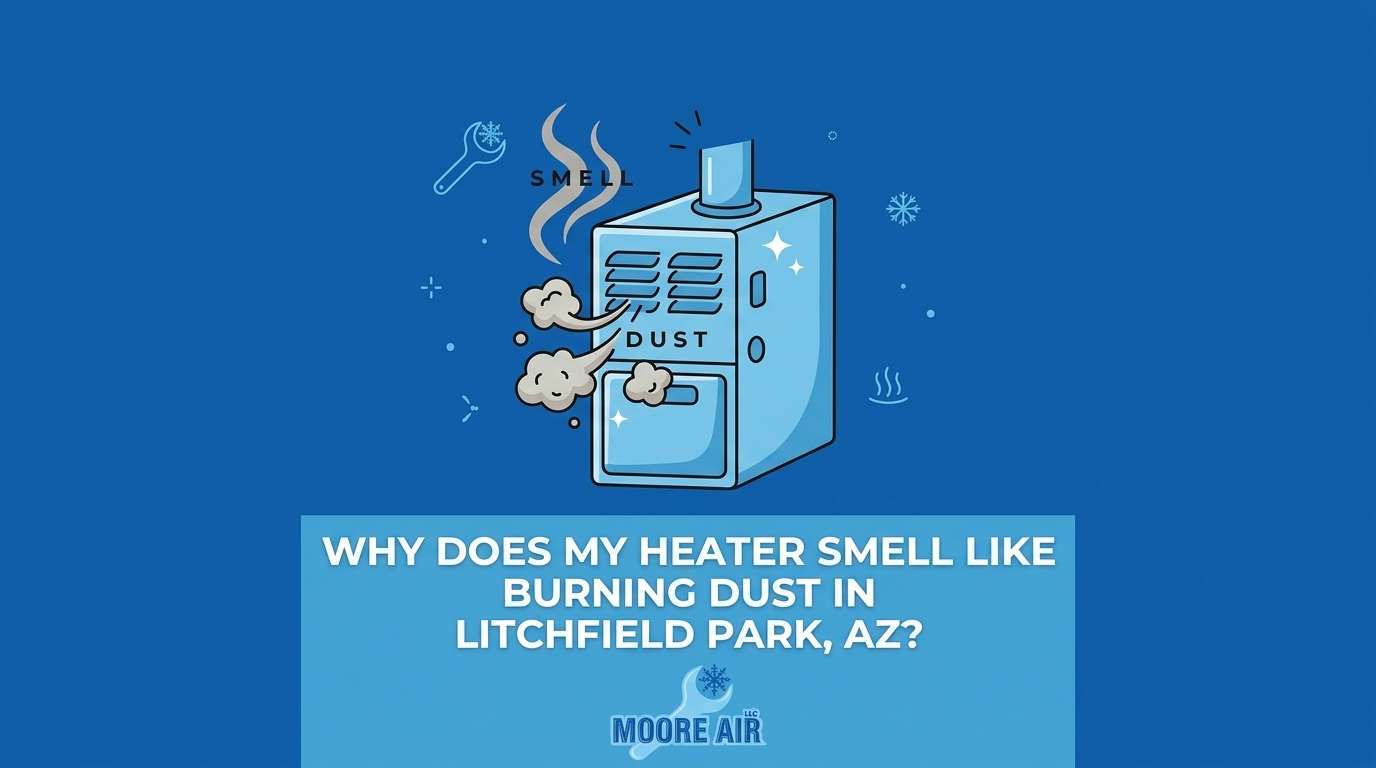
Why Does My Heater Smell Like Burning Dust in Litchfield Park, AZ?
Is It Normal for My Heater to Smell Like Burning Dust?
When the first chilly desert night finally arrives and you switch your thermostat over to heat, one of the most common homeowner questions answered by our technicians is whether a sudden burning smell is a sign of danger. You wait months for the October heating startup, only to be greeted by an alarming, acrid odor blowing through your vents the moment the system kicks on. For many homeowners, this immediate olfactory assault triggers a wave of anxiety, leading to worries about electrical fires or catastrophic equipment failure.
It is completely understandable to feel alarmed when your home suddenly smells like something is catching fire. You have spent the last eight months relying entirely on your cooling equipment to survive the extreme desert heat. Now, those internal heating elements are firing up for the very first time since last winter. The sudden shift in operation wakes up dormant components that have been sitting idle in the dark.
Fortunately, you can take a deep breath. A brief burning odor during the first heating cycle of the fall is highly common and usually perfectly safe. While transitioning your system for the season, the furnace or heat pump is simply burning off debris that has settled inside the unit. Not every strange smell means you need to immediately schedule air conditioning services or a massive heating overhaul. By understanding what causes this seasonal phenomenon, you can confidently distinguish between a harmless dust burn-off and a true mechanical emergency.
The Science Behind the October Heating Startup in the Desert
To understand why your heater produces such a distinct smell, you have to look at the unique environmental factors at play in Litchfield Park. Our region experiences an exceptionally long, intense eight-month cooling season. During this extended period, your furnace burners or heat pump heating strips sit completely dormant. They do not generate heat, they do not cycle on, and they remain entirely inactive while the air conditioning side of your system works overtime.
The accumulation of desert dust: The arid Maricopa County environment naturally increases the volume of airborne particulate matter in the atmosphere. We live in a dry, dusty climate. While you are busy trying to figure out why your AC runs non-stop during summer afternoons, microscopic desert sand, household dust, pet dander, and dead skin cells are constantly circulating through your ductwork. Even with a good air filter, a fine layer of this debris inevitably bypasses the media and settles directly onto your dormant heat exchanger.
The combustion process: When October arrives and temperatures finally dip into the 50s, you switch the thermostat to heat. The heat exchanger—a critical metal component inside your furnace—rapidly heats up to hundreds of degrees to warm the air passing over it. The thick layer of summer dust resting on that metal surface has nowhere to go. It is instantly subjected to extreme temperatures, and it literally combusts.
Regional climate impact: This is why the burning smell is so pronounced in Litchfield Park. Our dry, dusty climate combined with a prolonged cooling season results in a much stronger initial burn-off odor than you would experience in humid or cooler regions. In places with short summers, the dust layer is thin. In the Arizona desert, eight months of baked-on particulate matter creates a very noticeable, smoky scent the moment it meets a hot heat exchanger.
How Long Should the Dust Burn-Off Smell Last?
When you are frantically searching “why does my heater smell like burning dust,” the most important piece of information you need is a clear, actionable time limit. How long is too long? Knowing the safe window for dust burn-off prevents unnecessary panic and helps you make smart decisions about your home’s safety.
The standard, safe window for normal dust burn-off is 20 to 30 minutes. During this timeframe, the odor will go through a specific lifecycle as the system reaches its peak operating temperature.
- The initial ignition (0 to 5 minutes): The burning smell will be strongest right as the system fires up. As the heat exchanger rapidly climbs in temperature, the thickest layer of accumulated dust flashes off all at once. You may even notice a very faint haze near the vents, though thick smoke is never normal.
- The peak odor (5 to 10 minutes): The smell will fully permeate the house as the blower motor pushes the heated, scented air through your ductwork into every room. This is the point where the odor is most noticeable.
- The dissipation phase (10 to 30 minutes): As the loose dust is completely incinerated, the smell should steadily weaken. You will notice the air clearing up, and the burning scent will fade into the background.
- The warning threshold (30+ minutes): If the system has been running for over half an hour and the smell is just as strong—or getting worse—you have crossed the threshold of normal burn-off.
Ventilation tips for the first cycle: To make this initial October heating startup more comfortable, practice simple ventilation techniques. Open a few key windows on opposite sides of the house to create a cross-breeze for the first 15 minutes of the heating cycle. Turn on ceiling fans to keep the air moving. Once the 30-minute window has passed and the smell has dissipated, you can close the windows and enjoy a warm, odor-free home for the rest of the winter.
Normal Dust Burn-Off vs. Dangerous Electrical Smells
Establishing clear, safe diagnostic boundaries is crucial for protecting your home. While a burning dust smell is a harmless seasonal annoyance, other odors indicate serious mechanical failures within your central HVAC systems. Knowing the difference between these olfactory signatures can save your equipment from catastrophic damage.
The “No Games” diagnostic approach: We believe in honest diagnostics over fear-based immediate service calls. By giving you the safe, clear boundaries outlined below, you can prevent unnecessary panic and only call for help when you truly need a repair.
| Odor Signature | Likely Cause | Danger Level | Action Required |
|---|---|---|---|
| Burning dust, dirt, or hair | Normal accumulation on the heat exchanger burning off during the first fall cycle. | Low | Monitor for 20-30 minutes. Open windows to ventilate. |
| Acrid, melting plastic | A foreign object in the ductwork or melting wire casings inside the air handler. | High | Shut off system immediately. Call for professional inspection. |
| Sharp, metallic ozone | An overheating blower motor, failing capacitor, or serious electrical short. | High | Shut off system at the thermostat and breaker. Call for emergency repair. |
| Rotten eggs or sulfur | A natural gas leak from the furnace line or a cracked heat exchanger. | Severe | Evacuate the home, leave doors open, and call the gas company. |
Signs of an electrical emergency: If you smell burning plastic or electrical ozone, do not wait for the 30-minute window to expire. These smells indicate that a component is actively melting or short-circuiting. An overheating blower motor will often produce a sharp, metallic scent right before it fails completely. Melted wiring creates a highly toxic, chemical plastic smell that burns the back of your throat.
The immediate shut-off protocol: If you detect any of the dangerous smells listed above, or if you ever see visible, dark smoke coming from your vents, take immediate action. Walk straight to your thermostat and switch the system to the “Off” position. Do not just lower the temperature; turn the system entirely off. If the smell is particularly strong, locate your electrical panel and flip the breaker for the HVAC system to cut all power, then contact a licensed technician.

The Role of Air Filters in Fall HVAC Transitions
One of the most overlooked factors contributing to a strong burning smell during the fall transition is the condition of your air filter. After enduring heavy summer usage, your filter has spent months trapping massive amounts of Litchfield Park dust, pollen, and debris. If you do not change it before turning on the heat, you are setting your system up for poor performance and exacerbated odors.
EPA Indoor Air Quality standards: The Environmental Protection Agency (EPA) notes that indoor air can be significantly more polluted than outdoor air, largely due to trapped airborne particulates. Maintaining a clean filter is your first line of defense against poor indoor air quality, especially when the house is sealed up for the cooler months.
The 30-90 day replacement rule: As a general guideline, standard one-inch HVAC filters should be replaced every 30 to 90 days. However, the transition from the cooling season to the heating season is a mandatory replacement milestone. A filter that has survived an Arizona summer is fully saturated.
How clogged filters cause overheating: When a filter is clogged with summer dust, it severely restricts the airflow moving into the system. Your furnace requires a massive, steady volume of air to absorb the heat generated by the heat exchanger. If airflow is choked off by a dirty filter, the heat exchanger gets much hotter than it was designed to get. This excessive heat not only makes the initial dust burn-off smell much harsher and longer-lasting, but it can also cause the system to trip its high-limit safety switch and shut down entirely.
- Check the MERV rating: For capturing fine desert dust without restricting airflow, look for a pleated filter with a MERV rating between 8 and 11.
- Inspect monthly: Pull the filter out once a month and hold it up to a light. If you cannot see light shining through the media, it is time for a replacement.
- Clear the return vents: Ensure that no furniture, rugs, or curtains are blocking the large return grilles in your home, which further restricts critical airflow.
Preventing Startup Smells with Proactive Maintenance
While the October heating startup smell is generally harmless, you do not actually have to endure it every single year. The most effective way to eliminate the burning dust odor is to remove the dust before the system ever turns on. Professional cleaning of the heat exchanger prevents the burning dust smell entirely, ensuring a fresh, odor-free transition into the fall.
The value of a professional tune-up: By scheduling a preventative HVAC maintenance plan before the first cold front hits, you allow a licensed technician to thoroughly clean the internal components. They will safely wipe down the heat exchanger, vacuum out the burner compartment, and remove the eight months of accumulated desert dust. When you finally turn the heat on, there is simply nothing left to burn.
Avoiding unexpected failures: Proactive maintenance is the best way to prevent unexpected system behavior, whether in the dead of winter or the peak of summer. For instance, one local homeowner recently dealt with a complete air conditioning system failure when they needed it most. A technician was dispatched, identified the malfunction within minutes, and completed the repair rapidly, getting the system running again in no time. While we pride ourselves on that kind of rapid, accurate troubleshooting, enrolling in a preventative maintenance plan helps you avoid those stressful emergency situations entirely.
Professional safety checks: Beyond cleaning, fall maintenance includes critical safety checks that protect your home. A technician will inspect electrical connections that may have vibrated loose during the summer, test the blower motor’s amperage, and ensure the safety limit switches are fully operational. These expert steps extend the longevity of your equipment and guarantee that when you need heat, it is delivered safely and efficiently.
Answering Your Top Questions About Fall Heater Odors
When you encounter a strange smell coming from your vents, you want fast, accurate information. Here are direct answers to the most common homeowner questions regarding the burning smell phenomenon, giving you the knowledge you need to keep your home safe.
How long does the burning smell last when you turn on the heater?
The burning dust smell typically dissipates within 20 to 30 minutes of the first heating cycle. The exact duration depends heavily on the amount of dust that accumulated on the heat exchanger over the long summer. If the odor continues to blow strongly through the vents after half an hour, it is time to turn the system off and investigate further.
Is it safe to run my heater if it smells like burning?
Yes, it is generally safe to run your heater if the smell is strictly burning dust or hair and it fades quickly. This is a normal part of the seasonal transition. However, it is entirely unsafe to continue running the system if the odor is accompanied by visible smoke, sparking sounds, or the sharp smell of melting plastic.
Why does my heater smell like burning plastic?
A burning plastic smell indicates a potential electrical issue, a melted wire casing, or a foreign object that has fallen into the ductwork. This is not a normal seasonal odor and requires your immediate attention. You must shut the system down at the thermostat right away and schedule a professional inspection to prevent a fire hazard.
Can a dusty heater catch on fire?
Standard household dust burning off the heat exchanger is a controlled, expected process and is not a fire hazard. The dust flashes off safely inside the metal compartment. However, severe airflow blockages from neglected filters or failing electrical components do pose genuine fire risks, which is why annual maintenance is so highly recommended.
Why does my heat pump smell like burning hair?
Heat pumps use auxiliary electric heating strips to provide supplemental warmth when temperatures drop sharply. These strips get incredibly hot and will burn off accumulated pet hair, human hair, and dust instantly. The smell is identical to a hair dryer that has gathered dust, and it should clear up within the same 20 to 30-minute window.
Should I open my windows during the first fall heating cycle?
Yes, opening your windows for the first 15 to 20 minutes of the initial heating cycle is a great way to ventilate the home. It allows the harmless but unpleasant dust burn-off odor to escape quickly. Once the smell has dissipated from the vents, you can close the windows and let the system warm the house normally.
Get Honest Diagnostics for Your Litchfield Park Heating System
Navigating the seasonal transition from extreme summer heat to chilly fall nights should be a comfortable experience, not a stressful one. A brief burning dust smell is a completely normal part of the October heating startup in Litchfield Park. As long as the odor follows the 30-minute rule and lacks any sharp electrical or plastic scents, your system is simply clearing its throat for the winter.
However, you should never have to guess when it comes to the safety of your home. If the odor persists, if you notice strange noises, or if you simply want the peace of mind that comes with a clean system, it is always best to reach out to an expert. We are committed to providing “No Games” honest diagnostics, ensuring you get the exact answers you need without unnecessary pressure. If you are concerned about your system’s performance this season, schedule professional AC repair and heating inspections today to keep your home safe, warm, and odor-free.