Duct Cleaning vs. Duct Sealing: Which Improves Your Fall IAQ More?
The Myth of the Quick Fix for Dusty Homes
A common misconception among homeowners is that a single, thorough duct cleaning is all it takes to permanently eliminate the dust settling on your furniture and floating through your home. When you are constantly wiping down countertops only to find a new film of dirt the very next day, you eventually have to ask: Duct Cleaning vs. Duct Sealing: Which Improves Your Fall IAQ More? At Moore Air, LLC, we constantly hear from Litchfield Park homeowners who are frustrated by the excessive indoor dust accumulation following heavy summer storms. Many seek a quick fix, but our team can tell you from experience that simply sweeping out the ductwork rarely solves the underlying issue.
The real decision point lies in understanding the mechanics of your HVAC system. You must decide whether to invest in duct cleaning to remove existing, settled dust, or duct sealing to prevent new, dusty, unconditioned attic air from entering the airstream in the first place. Treating the symptom will only give you a brief reprieve if you ignore the root cause.
To truly resolve these persistent issues, you need comprehensive indoor air quality services that evaluate the entire system, along with professional duct work services designed to secure your home’s infrastructure.
The Root Cause: Why Is My House So Dusty After Monsoon Season?
To understand why your indoor air quality plummets during the September post-monsoon fall transition, you have to look directly at the physics of air pressure and the unique climate challenges of Arizona. In our years of inspecting ductwork throughout Litchfield Park, we frequently see that a home’s duct system is rarely a perfectly sealed closed loop. Over time, the materials expand, contract, and degrade, creating small gaps and disconnections.
The State of the September Attic
During the late summer, high winds and haboobs force massive amounts of fine desert silt, dirt, and environmental particulate matter through your roof vents and into the unconditioned attic space. This leaves behind a massive reservoir of dust sitting directly above your ceiling. When your HVAC system turns on, it changes the air pressure dynamics within the house.
- The Negative Pressure Vacuum: When there are leaks in your return ducts (the side of the system pulling air inside to be cooled or heated), the system creates negative pressure in the attic. Unsealed return ducts act like powerful vacuums, pulling the surrounding unconditioned air directly into the ductwork.
- The Contaminant Infiltration: Instead of only pulling clean, filtered air from inside your living room, the system is now pulling in the fine post-monsoon silt, degraded insulation fibers, and extreme heat from the attic.
- The Airstream Distribution: Once this contaminated attic air enters the return ducts, it bypasses your primary filter, moves through the blower motor, and is forcefully distributed into every room of your house through the supply vents.
This physical infiltration is the direct link between duct leakage and the rapid decline in your indoor air quality. As long as your system acts as a vacuum for attic debris, your home will remain relentlessly dusty.
Duct Cleaning: Treating the Symptom
Duct cleaning is the physical removal of existing, settled particulate matter from the interior of your ductwork. Using specialized agitation tools and heavy-duty vacuums, technicians dislodge and extract the dirt, pet dander, and debris that have accumulated inside the metal or fiberglass channels over the years. While this service has a specific utility, it is crucial to understand its limitations when used in isolation.
The Problem-Cause-Solution Breakdown
The Problem: You notice a heavy buildup of dust around your vent registers, or you have recently completed a major home renovation that generated significant drywall dust. You schedule a duct cleaning, but within a few weeks, the heavy dust returns to your Litchfield Park home. It is a pattern we see all too often.
The Cause: The duct cleaning successfully removed the debris that was sitting in the ducts on that specific Tuesday. However, it did absolutely nothing to fix the structural leaks in the ductwork. Every time the blower motor kicks on, the system resumes pulling in fresh dust from the attic reservoir.
The Solution: You must recognize duct cleaning for what it is: a treatment for a symptom. The Environmental Protection Agency (EPA) explicitly notes that duct cleaning has not been shown to prevent health problems if the underlying source of contamination is not addressed. Cleaning is highly beneficial for removing visible mold, heavy post-construction debris, or extreme pet dander, but it is only a temporary fix for dust if the system continues to pull in new debris from unconditioned spaces.
Duct Sealing: Addressing the Source
If cleaning is the equivalent of mopping up a puddle, duct sealing is the equivalent of fixing the leaky pipe. Duct sealing is the process of permanently closing the leaks, holes, and poor connections in your HVAC infrastructure to isolate the airstream entirely from unconditioned spaces. This is the foundational step for achieving long-term indoor air quality improvement.
How Sealing Protects Your Living Space
According to ENERGY STAR data, in a typical house, about 20 to 30 percent of the air that moves through the duct system is lost due to leaks, holes, and poorly connected ducts. In the harsh climate of the September post-monsoon fall transition, that means up to 30 percent of the air you are breathing might be tainted by attic infiltration.
By applying specialized mastic sealants, metal-backed tapes, or aerosolized sealing technologies to the duct joints, professionals create a permanent physical barrier. This stops the attic dust reservoir from entering the living space, effectively neutralizing the root cause of your dusty home. Once the ductwork is structurally sound, the negative pressure vacuum is eliminated. The system only pulls air from inside the home, passes it through your high-efficiency filter, and returns clean, conditioned air to your rooms.
Beyond the massive improvements to your indoor air quality, sealing offers significant secondary benefits. Because you are no longer losing conditioned air to the attic, your HVAC system does not have to work as hard to reach the temperature set on the thermostat. This leads to more consistent temperatures across different rooms, less wear and tear on the blower motor, and improved overall energy efficiency. This combination of comfort, efficiency, and air quality is exactly why fall is the ideal time for duct sealing. Additionally, generic federal tax credits and local utility incentive programs may apply to qualifying home energy efficiency improvements like duct sealing. We always advise our customers to verify current programs with their utility provider or a tax professional to maximize their investment.
Head-to-Head Comparison: Cleaning vs. Sealing
When weighing your options for fall IAQ improvements in Litchfield Park, it helps to see exactly how these two services differ in their execution and their long-term impact. One service is an ongoing maintenance task designed to reset the cleanliness of the system, while the other is a permanent infrastructure upgrade designed to change how the system operates.
Service Impact Breakdown
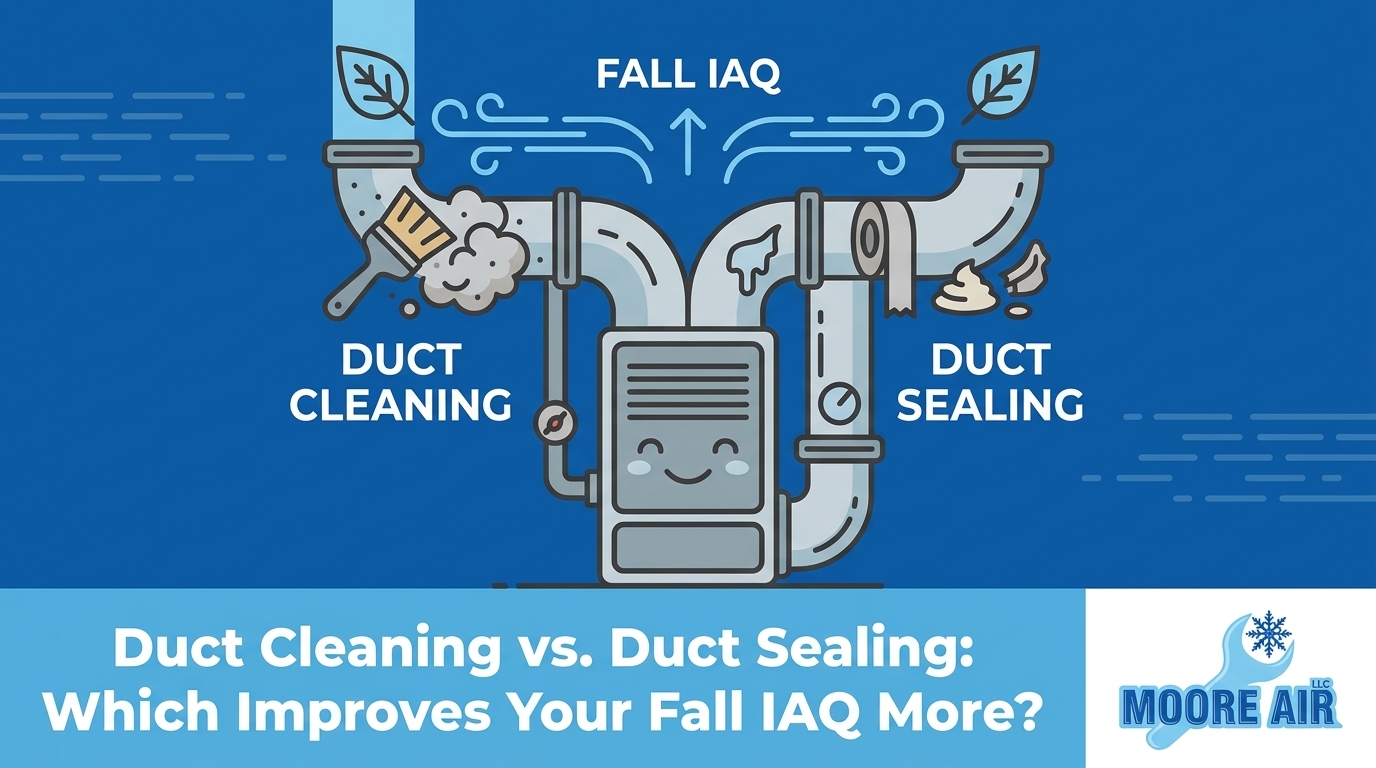
Both services carry distinct value, but they serve entirely different primary functions. Duct cleaning focuses on the historical buildup inside the channels. Duct sealing focuses on the structural integrity of the channels themselves. If your goal is to stop environmental dust from entering the home, our team strongly recommends sealing as the initial investment.
| Service | Primary Action | Target Focus | Impact on Indoor Air Quality |
|---|---|---|---|
| Duct Cleaning | Physically removes existing debris, pet dander, and settled dust from inside the duct channels. | Treats the Symptom (Existing Dirt) | Temporary IAQ boost; dust will return rapidly if duct leaks are present. |
| Duct Sealing | Closes structural leaks, holes, and disconnections using mastic or aerosol sealants. | Treats the Root Cause (Attic Infiltration) | Permanent IAQ protection; stops unconditioned, dusty air from entering the airstream. |

Should I Seal My Ducts Before Cleaning Them?
Yes, absolutely. Establishing the correct hierarchy of indoor air quality solutions is critical to ensuring your investment actually delivers results. The logical order of operations dictates that you must always address the source of the contamination before you spend time and money cleaning up the existing mess.
Paying for a comprehensive duct cleaning without first verifying that the ductwork is sealed is often a wasted effort. If you clean the ducts during the September post-monsoon fall transition but leave the structural leaks open, the very next windstorm will force a fresh wave of attic dust right back into your newly cleaned system.
- Diagnostic Testing: A professional evaluates the ductwork to identify disconnections, degraded tape, and major holes where attic air is infiltrating.
- Comprehensive Sealing: Technicians apply permanent sealants to close the gaps, isolating the airstream from the unconditioned attic environment.
- Thorough Cleaning: Once the system is structurally sound and protected from future infiltration, a duct cleaning is performed to remove whatever residual dust remains inside the channels.
By following this ideal scenario, you ensure that the cleaning actually lasts, providing you with high-quality indoor air throughout the fall and winter.
Honest Advice for Long-Term IAQ
Navigating home comfort solutions requires working with a provider who prioritizes transparent advice and long-term structural integrity over quick up-sells. A reputable technician will openly explain the difference between short-term fixes and long-term projections, ensuring you understand exactly what you are paying for.
Looking at the Connected Environment
Be wary of service providers who aggressively push routine duct cleanings without ever taking the time to physically inspect the ductwork for underlying leaks. A proper diagnosis involves looking at the entire HVAC system as a connected environment. If the return plenum is pulling air directly from a dusty attic, cleaning the supply vents is an exercise in futility.
This commitment to honest, quality work is what separates a true diagnostic approach from a simple transaction. For example, when our team at Moore Air recently responded to a local homeowner who reported an AC unit issue during the peak summer heat, our technicians diagnosed the problem and fixed it on the spot, completing the entire repair within 12 hours of the initial call. That same standard of rapid, honest diagnosis applies to your ductwork. We focus on educating you about what actually solves your problem—stopping the attic infiltration—rather than up-selling an unnecessary cleaning service.
To ensure your ductwork remains intact and your system operates cleanly over time, regular check-ups are essential. Enrolling in a comprehensive HVAC maintenance plan guarantees that a professional is regularly inspecting your system for new leaks, degraded seals, and proper airflow, protecting your indoor air quality year-round.
Make the Right IAQ Investment This Fall
Protecting your Litchfield Park home from lingering seasonal dust requires more than just a superficial sweep; it requires addressing the true source of the problem. As we move through the September post-monsoon fall transition, understanding that duct sealing stops attic dirt from entering your home while cleaning only treats the symptom empowers you to make the smartest possible investment.
Before you commit to a routine cleaning that may only offer temporary relief, have your ductwork thoroughly evaluated for structural leaks and negative pressure issues. Resolving the debate of Duct Cleaning vs. Duct Sealing: Which Improves Your Fall IAQ More? ultimately comes down to prioritizing the integrity of your system. Consult with our local experts at Moore Air today to schedule professional duct work services and secure a cleaner, healthier home for the season ahead.
Frequently Asked Questions
Should I seal my ducts before cleaning them?
Yes, you should always seal your ducts before investing in a cleaning. Sealing fixes the structural leaks that allow attic dust to enter the system in the first place. If you clean the ducts without sealing them, new dust will simply re-contaminate the system within a matter of days or weeks.
Why is my house so dusty after monsoon season?
Heavy winds and haboobs force massive amounts of fine dirt into your home’s attic space. If your ductwork has leaks, the HVAC system acts like a vacuum, pulling that settled attic dust into the return ducts and blowing it directly into your living areas. This negative pressure infiltration is the primary cause of sudden, severe indoor dust.
Does duct cleaning actually improve air quality?
Duct cleaning can improve air quality by removing significant blockages, visible mold, or heavy pet dander from the channels. However, the EPA notes that cleaning alone does not prevent health issues if the underlying source of the contamination—like leaking attic air—is not properly addressed first.
Can duct sealing replace duct cleaning?
Duct sealing and duct cleaning serve two entirely different purposes and cannot replace one another. Sealing is a structural repair that stops new dust from entering, while cleaning is a maintenance task that removes existing dust. For the best results, sealing should be performed first, followed by a cleaning to remove residual debris.
Does duct sealing improve indoor air quality?
Yes, duct sealing is one of the most effective ways to permanently improve indoor air quality. By closing the gaps and disconnections in the ductwork, you create a physical barrier that stops unconditioned, contaminated air from the attic, crawlspace, or walls from mixing with the air you breathe inside the home.
How do I know if my ductwork is leaking attic air?
Common signs of leaking ductwork include a sudden increase in indoor dust, higher than normal energy bills, and rooms that are difficult to heat or cool evenly. A professional HVAC technician can perform specialized diagnostic tests, such as a blower door test or a visual inspection of the duct joints, to pinpoint exactly where the air is escaping.