Why Does My AC Smell Musty After an August Rainstorm?
The Sudden Arrival of Monsoon Odors
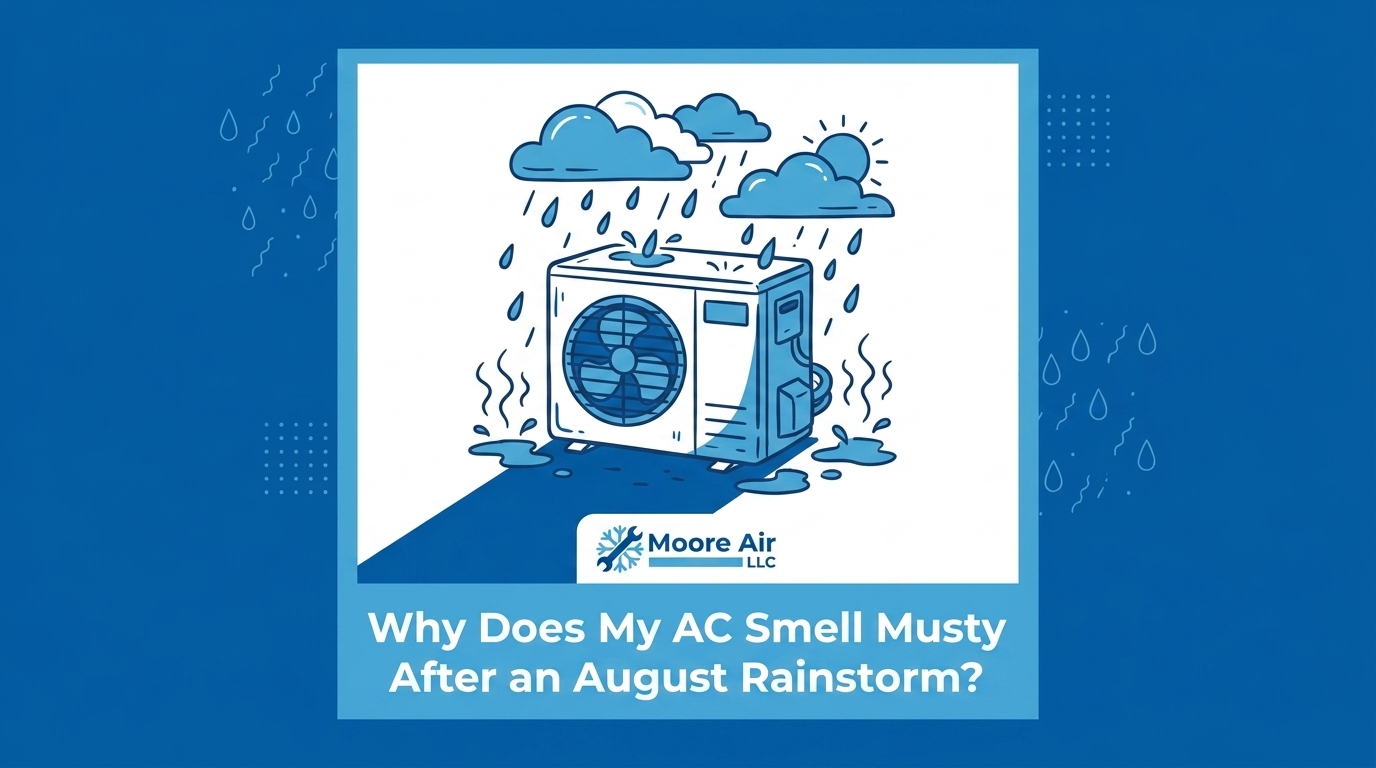
The late-summer weather shifts quickly in the Valley, and you might find yourself asking: why does my AC smell musty after an August rainstorm? It is a jarring experience to turn on your system right after a heavy downpour in Litchfield Park, AZ, and be hit with a damp, moldy odor instead of crisp, cool air. You expect your air conditioner to provide a refreshing escape from the severe weather outside, not to bring the smell of a wet basement right into your living room.
When this happens, you need professional air conditioning services to diagnose the root cause and restore your comfort.
Often, homeowners immediately worry that a major mechanical component has failed. However, sudden environmental shifts, rather than sudden mechanical failures, are usually to blame for these foul odors. The rapid shift in weather patterns during late summer acts as a massive shock to HVAC systems that have been running continuously in dry, arid conditions for months. The system is suddenly forced to process a massive influx of moisture that it simply wasn’t handling a week prior.
The most important decision point you face is knowing whether this smell is a passing nuisance that will clear up as the weather dries out, or a definitive sign that your system needs professional attention. Ignoring a persistent odor can lead to degraded indoor air quality and lingering discomfort. This guide will walk you through the exact mechanics behind why those August monsoon rainstorms trigger that terrible smell, what is happening inside your unit, and the appropriate next steps to clear the air in your home.
How Arizona’s Climate Shift Triggers AC Odors
To understand why your vents suddenly smell terrible, you have to look at the unique regional weather mechanics of Litchfield Park, AZ. Your air conditioning system does not operate in a vacuum; it constantly interacts with the air inside and immediately outside your home. The transition from the extremely arid, dry conditions of early summer to the sudden spikes in humidity creates the perfect storm for HVAC odors.
Typical air conditioning cooling cycles operate incredibly efficiently in dry heat. As warm indoor air blows over the cold evaporator coil, the system removes heat and pushes cool air back into the rooms. In a dry climate, there is very little moisture in that indoor air to condense on the coil. However, when the weather shifts, the system suddenly struggles to manage massive influxes of moisture. The evaporator coil, which normally dries out completely between cycles, remains constantly damp when ambient humidity remains elevated for consecutive days.
The Dry June Dust Accumulation
During the early summer months, your system runs constantly to combat the intense heat. As it operates, it pulls in microscopic, dry dust and dormant airborne particles. Even with a good air filter, a small amount of this debris inevitably makes its way to the indoor evaporator coil.
- Dormant particles: Skin cells, pet dander, and standard household dust accumulate slowly on the aluminum fins of the coil.
- Lack of moisture: Because the early summer air is so dry, this dust simply rests on the evaporator coil without causing any odors or biological reactions.
- Hidden buildup: You will not notice this accumulation because it does not impede airflow significantly and produces absolutely no smell.
The High-Humidity Catalyst
Everything changes when the late-summer storms roll in. The introduction of heavy, humid air interacts directly with that previously dry, dusty coil. As your system attempts to cool the humid air, massive amounts of condensation form on the cold metal.
During extended humid spells, the coil fails to dry completely between cooling cycles. The constant moisture mixes with the dry dust accumulation, creating a wet, nutrient-rich environment in the dark interior of your air handler. This sudden transition from bone-dry to constantly damp is the exact trigger that activates the foul odors you smell through your vents.

Understanding “Dirty Sock Syndrome” in Your HVAC System
When you notice a strong musty smell after rain, you are likely dealing with a very specific, well-documented HVAC issue. The industry term for this phenomenon is “Dirty Sock Syndrome.” It gets this name because the odor closely mimics the smell of sweaty, unwashed athletic socks left in a gym bag. While the name is somewhat informal, the biological process occurring inside your system is highly specific.
Addressing this requires targeted indoor air quality solutions that go beyond simply spraying an air freshener in the room.
The biological process is straightforward but unpleasant: moisture combines with trapped organic matter (dust, dander) in a completely dark environment. This creates the perfect breeding ground for bacterial sludge and microbial growth directly on the fins of your evaporator coil. As the bacteria feed on the organic matter and multiply, they release gases.
The smell you notice is literally the off-gassing of these microbes as the system cycles air over the damp coil and pushes it through your ductwork. Every time the blower fan kicks on, it sweeps those gases directly into your living spaces.
It is important to differentiate this specific coil issue from other potential odor sources. If you have a dry P-trap in a nearby plumbing fixture, you will smell sewer gas, which is distinctly different from a moldy, wet-sock smell. If a small animal has unfortunately passed away inside your ductwork, the smell will be sharp, putrid, and constant, rather than a damp, musty odor that flares up specifically when the AC is running.
Temporary Odor vs. Established Biological Growth
Once you recognize the smell, you face a critical decision: should you wait for the weather to clear up, or do you need to take immediate action? Not every musty odor requires a massive intervention, but ignoring established growth can lead to ongoing problems long after the August monsoon rainstorms have passed.
Understanding the difference between a temporary reaction to high humidity and an established biological issue will save you time and frustration.
| Symptom / Behavior | Temporary Moisture Odor | Established Biological Growth |
|---|---|---|
| Odor Intensity | Faint, damp smell that is noticeable but not overwhelming. | Strong, pungent “dirty sock” smell that blasts into the room. |
| Duration | Dissipates after a few hours of operation once ambient humidity drops. | Persists every time the system cycles on, regardless of outside weather. |
| Weather Dependence | Only happens immediately during or after a heavy downpour. | Continues even on hot, dry days because the sludge is trapped on the coil. |
| Required Action | Monitor the system; it will likely clear as the coil dries. | Requires professional physical cleaning of the evaporator coil. |
A crucial warning: Once bacterial sludge is established on the coil, simply waiting for dry weather will not remove the organic matter. The bacteria will go dormant when it dries out, only to flare up instantly the next time moisture is introduced. Furthermore, you should never attempt to mask the scent with plug-in air fresheners or scented sprays. These products do not address the root cause, and they introduce additional volatile organic compounds (VOCs) into an environment that is already struggling with poor air quality.
Protecting Your Indoor Environment During High Humidity
Managing that post-rain smell is just one part of a larger strategy. Elevated indoor humidity—specifically anything above 60%—exacerbates the risk of biological growth spreading far beyond the indoor coil. When the air inside your home remains heavy and damp, moisture can condense on the interior walls of your ductwork, leading to much larger indoor air quality issues.
A typical pattern we see in Litchfield Park, AZ, is a system working overtime during these humid spells, struggling to pull enough moisture out of the air. One local homeowner reached out recently when their air conditioner malfunctioned and needed immediate repair right in the middle of a muggy stretch. A technician quickly diagnosed and fixed the problem, getting the unit running again in a short amount of time. Often, these sudden breakdowns occur because the system is stressed by the heavy moisture load, highlighting the need to manage your indoor environment proactively.
Your thermostat settings play a vital role here. Setting the fan to “ON” instead of “AUTO” during a humid spell is a common mistake. When the fan runs continuously, it blows air over the wet coil even when the cooling cycle is off, re-evaporating that moisture right back into your home. This defeats the dehumidification process entirely. For more detailed strategies, you can review our guide on managing indoor humidity during Arizona’s late summer monsoons.
Additionally, consistent filter changes become incredibly important during this time. A dirty filter restricts airflow, which makes the coil colder and wetter, prolonging the damp conditions that bacteria love. When your system is working overtime to dehumidify, a fresh filter ensures it has the airflow necessary to operate correctly. Ultimately, addressing the environment around the coil is a critical step in maintaining a healthy, comfortable indoor space.
Honest Diagnostics and Professional Coil Cleaning Solutions
If you have determined that the musty smell after rain is not going away on its own, it is time for professional intervention. Cleaning an evaporator coil is not a weekend DIY project. It requires specialized, non-acidic foaming cleaners and professional handling. The aluminum fins on the coil are incredibly delicate; brushing them too hard or using the wrong chemical can bend the fins, restrict airflow, or eat through the metal, causing a massive refrigerant leak.
The professional process for clearing Dirty Sock Syndrome is thorough and targeted. We provide comprehensive AC maintenance to resolve these exact issues safely.
First, a licensed technician safely accesses the indoor coil, which is often sealed tightly inside the air handler. They apply targeted, foaming treatments that push deep into the fins to lift out the biological growth and dust. Once the foam does its job, the coil is carefully rinsed. Finally, the technician ensures the condensate drain line is completely clear, so all that newly freed sludge flows safely out of the system instead of backing up into your home.
Our commitment to “Honest Quality Work Fair Prices” means we contrast straightforward coil cleaning services against competitors who use mold smells as a scare tactic to sell entirely new units. A foul odor is usually a maintenance issue to be cleaned, not an automatic death sentence requiring a full system replacement.
Sometimes, replacing aging equipment is the only honest recommendation. For example, a local team recently replaced an aging air handler that was failing completely, completing the difficult job despite severe heat to ensure the home was comfortable. However, if your system is otherwise healthy and simply smells bad after a storm, a thorough cleaning is usually all that is required. Once clean, we can also introduce preventative upgrades like UV germicidal lights, which mount inside the air handler and actively prevent microbial growth from ever returning to the coil.
Frequently Asked Questions About Post-Rain AC Smells
Why does my house smell musty only after it rains?
The sudden influx of humidity prevents the AC coil from drying out between cooling cycles. When the air is dry, the dust on your coil remains dormant. However, when introduced to sudden moisture from a storm, that dormant dust becomes active biological growth, producing a strong musty odor.
Does dirty sock syndrome go away on its own?
Rarely. Once microbial growth is firmly established on the evaporator coil, it requires physical cleaning to remove. While the smell might fade slightly on very dry days when the coil temporarily dries out, the source remains on the metal and will flare up again the next time humidity rises.
Is a musty smelling AC dangerous?
While usually not immediately life-threatening, a musty smelling AC negatively impacts your indoor air quality. Breathing in the off-gassing from microbial growth can aggravate allergies, trigger asthma, and cause discomfort for anyone with respiratory sensitivities in the home.
Can a clogged drain line cause a musty smell?
Yes, standing water in a blocked condensate pan can produce similar odors. If the moisture pulled from the air cannot drain outside, it sits in the dark pan and stagnates. Professional diagnostics will always check both the evaporator coil and the drain line to pinpoint the exact source of the smell.
When should I call a professional for a musty AC?
If the smell persists for more than a day, or if it blasts strongly into the room every single time the system turns on, it is time to call for help. Reaching the indoor coil safely and applying the correct chemical treatments requires a licensed technician with the right tools.
Clear the Air with Professional Diagnostics
Sudden odors from your vents are a natural reaction to extreme humidity shifts in Litchfield Park, AZ, but they shouldn’t be ignored. When your system is hit by heavy monsoon moisture, the resulting biological growth on your coil can quickly turn your comfortable home into a damp, unpleasant environment.
You deserve an honest assessment to clean and restore your system rather than being pressured into replacing it over a maintenance issue. If you are tired of that lingering odor every time the thermostat clicks on, schedule an inspection for professional air conditioner repair to clear the air and restore your indoor air quality today.