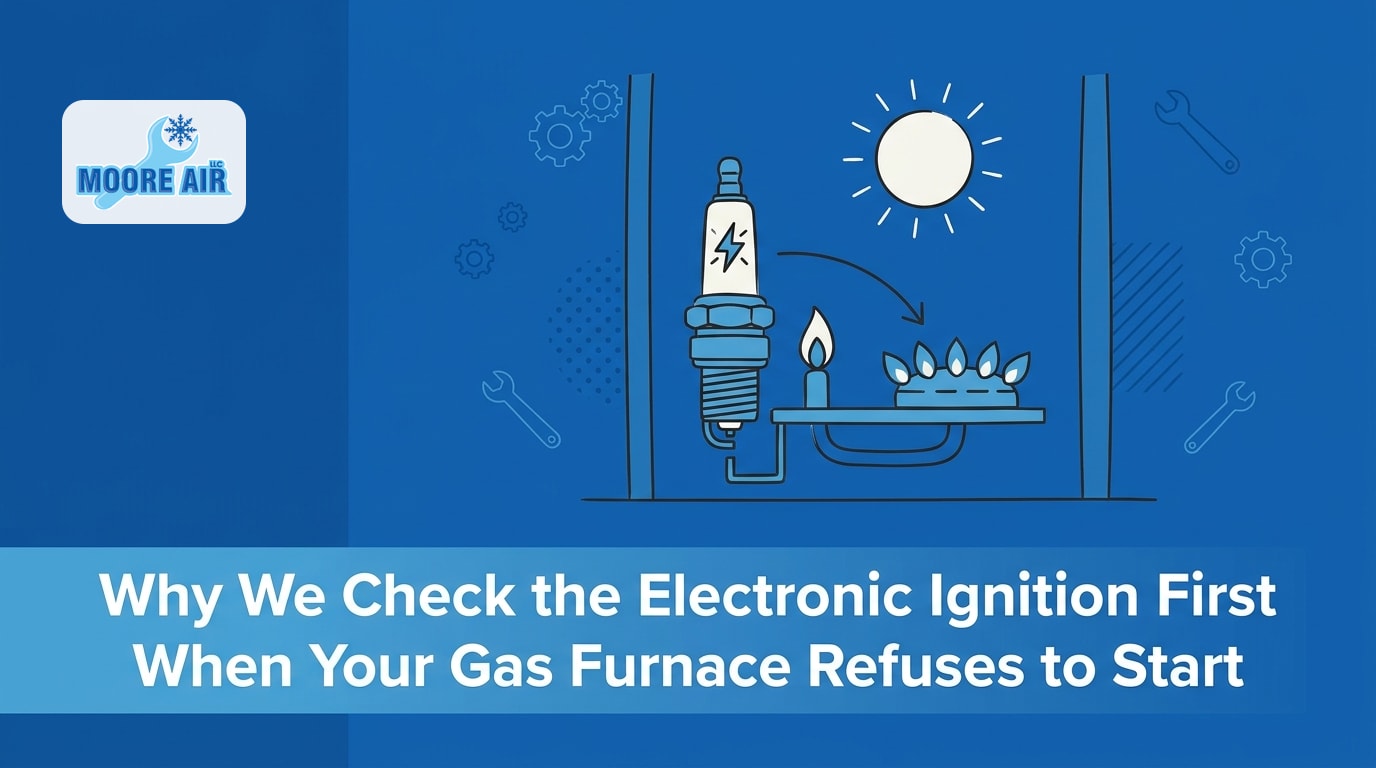
Why We Check the Electronic Ignition First When Your Gas Furnace Refuses to Start
The First Cold Snap Surprise: When Your Furnace Clicks But Won’t Ignite
You walk over to your thermostat on a chilly fall evening, switch the system to “heat,” and wait for that familiar rush of warm air. Instead, you hear the furnace click, a brief whoosh of flames, and then—immediate, frustrating silence. If you are experiencing this exact sequence during your November first-use after an 8-month idle summer, it is incredibly easy to panic and assume your entire heating system has suffered a catastrophic breakdown.
However, this specific pattern of starting and immediately stopping is rarely a sign of a destroyed furnace. More often than not, it points directly to a furnace electronic ignition failure. What feels like a broken system is actually your furnace’s built-in safety mechanisms doing exactly what they were designed to do: shutting down the equipment to protect your home. Before you worry about replacing major mechanical parts, it helps to understand why your system is intentionally aborting its own startup sequence. If you are dealing with a furnace that refuses to cooperate, exploring professional furnace services is the safest way to restore your home’s comfort.
Understanding the 3-Second Shutdown and Safety Lockouts
To understand why your furnace is shutting itself off, you first have to understand the precise mechanical sequence that happens every time your thermostat calls for heat. Modern gas heating systems do not use standing pilot lights that burn all day and night. Instead, they rely on a highly choreographed electronic sequence to ensure gas is only flowing when a fire is actively burning.
The Four Stages of Furnace Ignition
When everything is working correctly in a Litchfield Park / West Valley home, the ignition sequence follows these exact steps:
- The Call for Heat: Your thermostat detects a drop in room temperature and sends an electrical signal to the furnace control board.
- The Draft Inducer Starts: A small fan turns on to clear residual gases out of the heat exchanger and vent pipe.
- The Ignitor Activates: The electronic ignitor begins to glow bright orange (or sparks, depending on the model) to create a heat source.
- The Gas Valve Opens and Flame is Verified: The gas valve opens, releasing fuel over the ignitor to create a flame. Immediately, a dedicated flame sensor must detect that fire.
The critical moment happens in step four. Once the gas valve opens, the system starts a strict internal timer. The flame sensor has exactly 3 to 4 seconds to verify that a strong, consistent fire is burning. If the sensor does not detect a flame within that tiny window, the control board instantly slams the gas valve shut. This rapid response prevents unburned, raw gas from pooling inside your heat exchanger and leaking into your home.
What a Hard Lockout Actually Means
Your furnace will not just give up after one failed attempt. Typically, the control board will retry this entire sequence three consecutive times. If the flame sensor fails to register a fire on the third try, the furnace enters what HVAC professionals call a “hard safety lockout.” The system will completely shut down and refuse to try again for several hours, or until the power is manually reset at the breaker.
This lockout is a protective feature, not a mechanical failure. The control board and the gas valve are doing their jobs perfectly. If you are stuck in this cycle, scheduling a professional furnace repair is the best way to determine exactly why the sensor is failing to “see” the fire.

The Silent Culprit: How Desert Dust Causes Ignition Failure
If the gas is flowing and the fire is actually igniting for a few seconds, why is the furnace shutting down? The answer almost always comes down to a microscopic electrical failure caused by your local environment. Flame sensors do not use optical cameras to “see” a fire. Instead, they rely on a principle called flame rectification.
The Science of Flame Rectification
When a flame burns, it creates a small amount of ionized gas that can conduct electricity. The flame sensor is essentially a metal rod that sits directly inside the path of the fire. The furnace control board sends a tiny electrical charge into the sensor. When the fire touches the rod, the flame itself acts as a wire, carrying that electrical current back to the metal chassis of the furnace to complete the circuit.
This current is incredibly small—usually measuring between just 1 to 10 microamps. Because the electrical threshold is so low, the metal sensor rod must be absolutely spotless to conduct the charge. Even a microscopic layer of insulation will drop the current below the required threshold, causing the control board to assume the fire has blown out.
Why West Valley Dust is Particularly Troublesome
This brings us to the unique climate challenges of living in the desert. Litchfield Park’s exceptionally fine desert dust is notorious for infiltrating homes and settling over dormant HVAC components. During the 8-month idle summer when your furnace is completely powered down, this fine particulate matter coats the flame sensor rod.
When you finally experience that November first-use after an 8-month idle summer, the newly ignited flame instantly bakes that accumulated summer dust onto the metal rod. This baked-on layer acts as a perfect electrical insulator. The fire is burning, but the “blinded” sensor simply cannot transmit the microamp current through the barrier of baked desert dust.
| Sensor Condition | Microamp Reading | System Response | Result for Homeowner |
|---|---|---|---|
| Clean & Properly Calibrated | 2.0 to 10.0 microamps | Flame verified within 3 seconds | Continuous, reliable heat |
| Lightly Coated with Dust | 1.0 to 1.5 microamps | Intermittent flame verification | Furnace short-cycles or drops heating randomly |
| Heavily Insulated by Baked Dust | Below 0.5 microamps | Flame not detected; gas valve closes | Immediate 3-second shutdown and hard lockout |
Why Honest Diagnostics Focus on the Flame Sensor First
When a homeowner calls about a furnace that clicks, ignites, and dies, the diagnostic approach a technician takes makes all the difference. An inexperienced technician might hear the clicking, see the system shut down, and immediately assume the expensive control board has shorted out or the gas valve has failed mechanically.
Avoiding the “Parts Cannon” Approach
Throwing random parts at a problem—often called the “parts cannon” approach—is a frustrating and unnecessary experience for homeowners. At Moore Air, our commitment to honest diagnostics and a no-games approach to service means we follow the data, not assumptions. Because we know that homes in Litchfield Park / West Valley sit idle for most of the year, checking for simple dust fouling on the flame sensor is always our most logical first step.
By testing the microamp draw with a specialized multimeter, a professional can instantly confirm if the sensor is the bottleneck. If the current is dropping due to a dirty rod, the solution is a straightforward professional cleaning, not an invasive component replacement. This methodical troubleshooting protects your wallet and ensures you only pay for the exact service your equipment actually needs.
The Dangers of DIY: Why You Shouldn’t Clean the Sensor Yourself
Once homeowners learn that a dirty sensor is often the root cause of an ignition failure, the immediate temptation is to open the furnace cabinet and clean it themselves. While the concept of wiping off dust sounds simple, interacting with modern HVAC safety mechanisms carries significant risks.
The Hidden Fragility of Flame Sensors
Modern flame sensors are not just solid pieces of steel. Many are manufactured with delicate ceramic coatings or specific metallic alloys designed to withstand extreme heat cycles without degrading. When homeowners attempt to clean these sensors using standard household abrasives—like heavy-grit sandpaper, steel wool, or harsh chemical cleaners—they easily strip away this protective coating.
Once the ceramic or alloy layer is scratched or destroyed, the sensor will rapidly oxidize. A sensor that has been improperly cleaned might work for a few days, but it will quickly develop a thick layer of rust and fail completely, turning a routine cleaning into a mandatory parts replacement. Furthermore, working inside a gas appliance cabinet exposes you to live electrical voltage and delicate gas lines. Bumping or loosening a gas fitting while reaching for a sensor creates a severe fire hazard. Relying on a professional furnace tune-up ensures the sensor is safely removed, properly cleaned with specialized, non-destructive materials, and tested with a multimeter before the system is sealed back up.
Signs It’s Time to Call a Professional for Your Ignition System
Recognizing the difference between a temporary hiccup and a hard system failure can save you hours of frustration on a cold night. If you notice any of the following symptoms, it is time to stop adjusting the thermostat and call for an expert evaluation.
- Continuous clicking with no heat: The ignitor is attempting to spark or warm up, but the sequence never progresses to a sustained flame.
- Rapid short cycling: The furnace fires up, runs for just a few seconds, and shuts down, repeating this loop endlessly without ever warming your home.
- Complete system lockouts: The thermostat is set to heat, but the furnace is completely unresponsive and refuses to even attempt an ignition cycle.
- Unusual gas odors near the cabinet: Any smell of raw gas during the startup sequence requires immediate professional attention and should never be ignored.
It is highly recommended to stop resetting your breaker if the system is locked out. Repeatedly forcing a furnace to bypass its safety lockout can cause permanent damage to the control board. Instead, consider testing your gas furnace before November arrives in full force, allowing a technician to clear away the summer dust before you desperately need the heat.
Frequently Asked Questions About Furnace Ignition Failures
Why is my gas furnace clicking but not lighting?
The clicking sound you hear is the electronic ignitor attempting to spark or warm up to ignite the fuel. If the system clicks but does not light, it usually means gas is not flowing from the valve, or a safety sensor is actively preventing the ignition sequence from completing. A professional diagnostic is required to trace the exact point of failure in the electrical sequence.
What happens when a furnace flame sensor is dirty?
A dirty sensor acts as a physical insulator, blocking the tiny microamp electrical current from passing through the flame. When this current drops below the required threshold, the furnace control board assumes the fire has blown out. To prevent raw gas from flooding your home, the system immediately shuts off the gas valve for safety.
Why does my furnace shut off after 3 seconds?
This brief 3-second window is a built-in safety lockout timeframe programmed into your furnace’s control board. If the flame sensor cannot verify a strong, consistent fire within 3 to 4 seconds of the gas valve opening, the system aborts the cycle. This rapid shutdown is a vital protective measure designed to prevent dangerous gas accumulation.
How do you know if your furnace ignitor is bad?
A bad ignitor will typically fail to glow bright orange or produce a spark when the thermostat calls for heat. However, visual inspection alone is not enough to confirm a failure. Professional multimeter testing is required to measure the resistance and confirm if the component has failed electrically or if the control board simply isn’t sending it power.
Can summer dust really stop a furnace from working?
Yes, fine dust settling over long idle periods easily coats sensitive electronic components inside your HVAC cabinet. When the furnace is turned on for the first time in the fall, that dust bakes onto the flame sensor, creating an insulating barrier. This is one of the most common reasons for first-use ignition failures in desert climates.
Restoring Your Home’s Comfort Safely and Honestly
Dealing with a furnace that refuses to cooperate on a cold evening is always stressful, but ignition failures are incredibly common and usually straightforward to resolve. Remember that a system lockout is your furnace’s way of prioritizing your family’s safety over operation. Rather than risking damage to delicate internal components or attempting to bypass safety controls, relying on professional diagnostics ensures the root cause is identified accurately. Reach out for an honest assessment to clear away the idle summer dust, restore your ignition system, and enjoy a warm, comfortable home all winter long.